Cape Town on a Budget: What $70/Day Actually Buys You
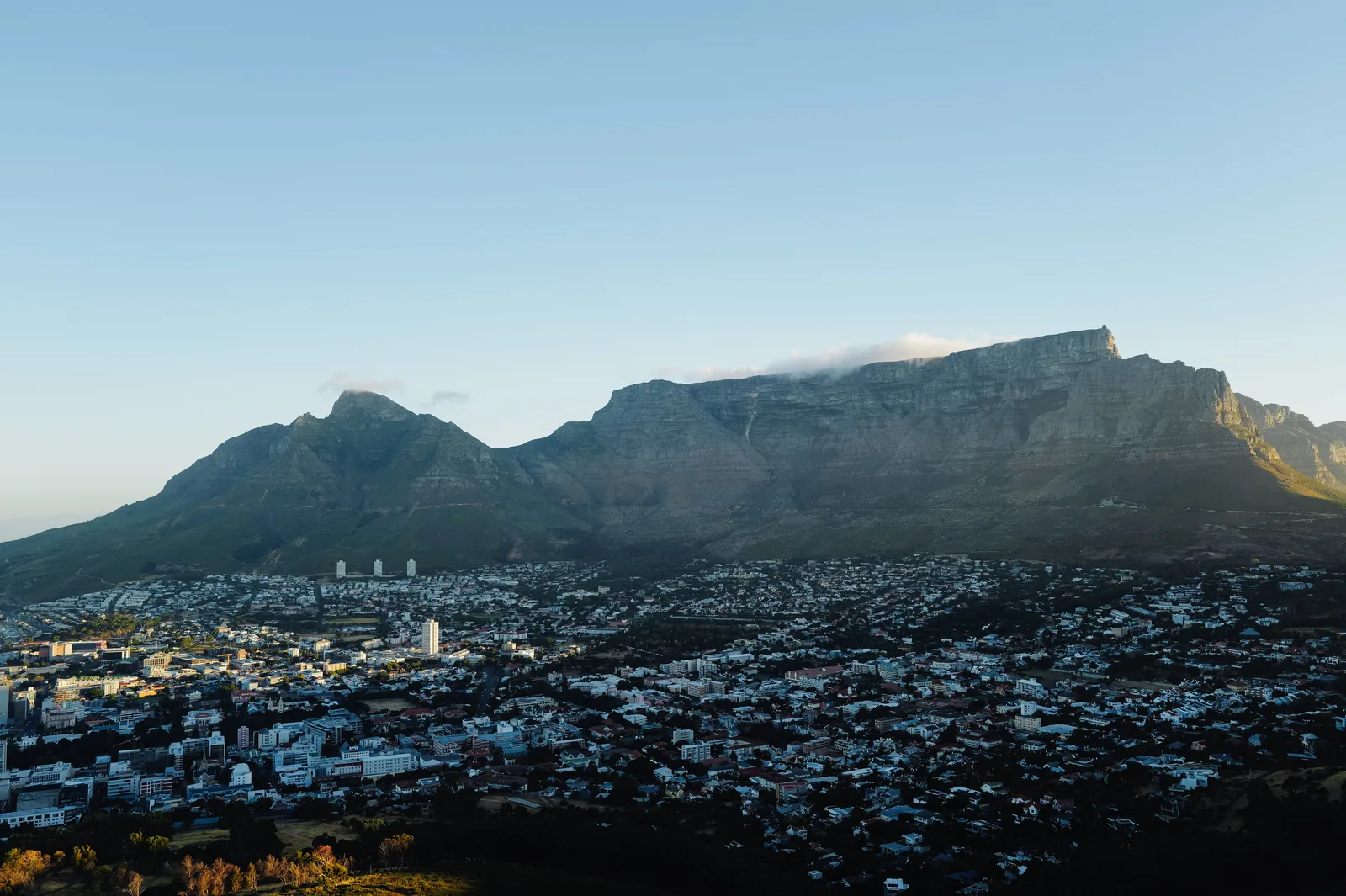
Quick answer
A $70 daily target can work in Cape Town, including accommodation, if you secure a dorm bed or well-priced simple room, eat mostly casual local food, use MyCiTi and build several days around beaches, neighborhoods, parks and free walks. It does not comfortably cover a private central hotel, ride-hailing throughout the day, restaurant-heavy eating and a major paid attraction every day. Plan in South African rand and treat the dollar figure as a moving conversion, not a fixed local price.
The honest answer: $70 works as an average, not a rule
Cape Town can deliver an excellent low-cost day. It can also produce a very expensive one before lunch.
That apparent contradiction is the key to budgeting the city.
Beaches, public spaces, neighborhood walks, Green Point Park, the Sea Point Promenade and many hiking routes do not require a ticket. Meanwhile, a cableway ride, Cape Peninsula outing or several long ride-hailing journeys can consume a large share of the same daily target.
So do not demand that every day cost exactly $70. Build a trip average from low-, medium- and high-spend days.
Convert the target once
The useful local budget is not $70. It is the amount of South African rand that $70 buys when you plan.
If the exchange rate is somewhere around R17-R19 per dollar, the daily target is roughly R1,190-R1,330. That is an illustration, not a live exchange-rate quote. Check the current rate, write down your rand target and keep using that number throughout the plan.
This prevents a favorable-looking conversion from quietly changing every time the currency moves.
A realistic daily framework
These are planning ranges per person. Accommodation varies too much by date to treat them as promises.
| Category | Lean target | More comfortable budget day | How to control it |
|---|---|---|---|
| Accommodation | R350-R500 | R650-R900 | Dorm or simple shared room versus private room |
| Food and drinks | R250-R350 | R400-R600 | Casual meals, groceries and one deliberate splurge |
| Local transport | R80-R180 | R200-R400 | MyCiTi versus several ride-hailing journeys |
| Activities | R0-R200 | R300-R600+ | Free city day versus one headline attraction |
| Possible total | R680-R1,230 | R1,550-R2,500+ | The $70 target requires the leaner pattern |
The table reveals the real constraint: a private room plus a major paid attraction is rarely a $70 day unless another category is unusually low.
Accommodation: solve the bed before the budget
Search your exact dates before trusting any daily range.
A dorm bed in a well-connected area is the easiest way to make the target work. A simple private room can still fit for couples sharing, but solo travelers should expect the room to take a much larger share.
Do not compare accommodation on nightly price alone. Record:
- the final checkout total;
- taxes and mandatory charges;
- whether breakfast is included;
- distance from useful MyCiTi routes;
- how many ride-hailing trips the location is likely to create;
- cancellation terms.
A cheaper room that forces two extra car journeys every day may be the more expensive choice.
For a city-first trip without a rental car, the City Bowl, Green Point and Sea Point are obvious areas to compare. They are not automatically cheap, but they make it easier to build days without crossing the entire metropolitan area.
Transport: Cape Town is bigger than it looks in photographs
MyCiTi can cover useful city and airport corridors, but it is not a door-to-door network for every attraction.
The official system uses a myconnect card and distance-based fares. It also sells unlimited packages: current published prices are R130 for one day, R290 for three days and R420 for seven days. That does not mean a pass is automatically good value. Compare it with the journeys you will actually take on the official MyCiTi fare pages.
The budget-friendly pattern is:
- choose accommodation around your likely routes;
- group each day geographically;
- use MyCiTi where it genuinely fits;
- reserve ride-hailing for the journeys it solves best;
- give Cape Point and other distant outings their own transport budget.
The expensive pattern is moving between the Waterfront, Camps Bay, Constantia, Muizenberg and the southern peninsula as though they were neighboring districts.
Food: Cape Town does not require restaurant deprivation
A workable budget day might include a simple breakfast, casual lunch and one proper but modest dinner. Groceries and takeaway food can create room for a meal you actually care about.
The category grows quickly when coffee, alcohol, market snacks, waterfront dining and delivery charges are treated as invisible extras.
Budget food by meal style, not by one generic daily number:
- breakfast from the hostel, bakery or supermarket;
- inexpensive lunch or takeaway;
- casual sit-down dinner;
- a separate amount for drinks and snacks.
If food is part of the reason you chose Cape Town, protect one or two intentional meals and simplify the others. A budget that removes every pleasure is unlikely to survive contact with the trip.
Table Mountain: it fits, but it owns the day
For travel between 1 July 2026 and 30 June 2027, the official online adult cableway fare is R475 return; buying at the ticket office costs more. Always recheck the official cableway ticket page because rates and operating conditions change.
At an illustrative R1,250 daily target, that return ticket consumes 38% of the whole day.
It can still fit if the rest of the day looks like this:
| Item | Example allocation |
|---|---|
| Dorm bed | R400 |
| Simple food | R280 |
| Local transport | R90 |
| Cableway return | R475 |
| Total | R1,245 |
That is a plausible budget day. It is not a generous one, and it leaves almost no buffer.
The cableway is weather-dependent, so avoid building a non-refundable chain of spending around one exact time. Hiking may remove the ticket cost, but it is not a casual money-saving substitute: route difficulty, weather, daylight, personal fitness and hiking safety all need proper planning. Do not hike an unfamiliar route alone simply to protect a budget.
The free days that make the average possible
Cape Town Tourism maintains current lists of inexpensive experiences, including Green Point Park, central-city walks and the V&A Waterfront Marine Wildlife Walk. Use those ideas as the foundation of low-spend days, not as filler.
Strong free or very inexpensive plans can include:
- Sea Point Promenade;
- Green Point Park;
- Company’s Garden and a central-city walk;
- Bo-Kaap streets explored respectfully;
- V&A Waterfront public areas and marine walk;
- beach time when weather and conditions suit;
- a properly planned hike with appropriate safety precautions.
The official tourism site’s under-R50 guide and under-R100 guide are useful starting points, but confirm the individual listing before relying on an old price.
Cape Point and Boulders are separate budget decisions
Do not hide the Cape Peninsula inside an ordinary “local transport” line.
Cape Point is distant from the City Bowl, and the day may include transport, conservation fees, food and additional stops. Boulders and Cape Point gates are cash-free, and SANParks states that its rates change annually; verify the current conservation fees on the official Table Mountain National Park rates page.
If the peninsula is essential, treat it as a high-spend day and balance it with two lower-cost city days. If it is optional, compare the full cost before assuming it belongs in a $70 trip.
Three days that produce a workable average
Low-spend city day: R750-R1,050
Dorm bed, simple food, MyCiTi or walking, Green Point Park, the promenade or a central-city route, plus a modest buffer.
Medium day: R1,050-R1,400
Dorm bed or shared room, casual meals, public transport with one ride-hailing journey and one inexpensive museum or experience.
High-spend highlight day: R1,500-R2,300+
Private room or more expensive accommodation, cableway or another major attraction, extra transport and restaurant dining.
Across five days, the pattern might be two low days, two days close to target and one planned splurge. That is more realistic than pretending the cableway, Cape Point and restaurant dining can all happen repeatedly inside the same figure.
What $70 does not comfortably buy
The target breaks when several of these appear together:
- private central accommodation for a solo traveler;
- ride-hailing as the default transport;
- restaurant breakfast, lunch and dinner;
- Table Mountain plus another paid attraction on the same day;
- a private Cape Peninsula tour;
- last-minute booking in a high-demand period;
- nightlife and alcohol that are not included in the food budget.
You can choose some of them. You cannot choose all of them and still call the trip a $70-a-day plan.
The buffer is not optional
Cape Town’s geography and weather make a zero-buffer itinerary fragile.
Keep money outside the daily target for:
- a transport change after dark;
- a cableway closure that rearranges the itinerary;
- a meal when the cheap option is not practical;
- changing plans because an area or route does not feel appropriate at that moment;
- currency movement or card charges.
Budget advice should never pressure you to continue with a plan that feels unsafe or unsuitable merely because the alternative costs more.
The final verdict
$70 per day can buy a real Cape Town trip, not merely survival. The workable version has a dorm or shared room, deliberate transport, casual food, several excellent free days and one or two paid priorities across the trip.
The number stops working when convenience, privacy and headline attractions are treated as daily defaults.
Use the strategy here, then replace every important range with a current quote for your dates. The goal is not to “beat” Cape Town by spending as little as possible. It is to know exactly which experiences your budget is buying - and which tradeoffs you are choosing on purpose.
Turn the budget into a practical schedule with our realistic weekend in Cape Town itinerary, including weather swaps and honest transfer time.
Traveling alone changes both the safety plan and the transport budget. Use our Cape Town solo travel guide to price the precautions you will actually use.
What changes this answer
- Accommodation decides whether the target works. A dorm bed leaves room for paid sights; a private room can consume most of the daily budget before breakfast.
- Cape Town is geographically spread out. A cheap-looking itinerary can become expensive when it relies on repeated ride-hailing or a long private transfer.
- Many strong city days are inexpensive or free, but headline outings such as the Table Mountain Cableway or Cape Point need to be planned as higher-spend days.
- Exchange rates move. Convert $70 into rand when you plan, then build every category in rand rather than reconverting individual purchases.
- Weather changes the budget. Wind can suspend the cableway, and a poor hiking day may replace a free plan with transport, food and an indoor attraction.
Recommendation by traveler profile
Solo backpacker
Use a well-located dorm, MyCiTi and mostly free city days. This is the traveler most likely to keep the full trip near $70 per day without feeling deprived.
Couple
Compare two dorm beds with a simple private room. Sharing accommodation can make the target more realistic per person, but restaurant and ride-hailing habits still matter.
First-time visitor
Choose two paid priorities before arrival, then surround them with free or inexpensive days instead of trying to buy every headline attraction.
No-car traveler
Base yourself around the City Bowl, Green Point, Sea Point or another area that fits your actual transport plan. Location is part of the transport budget.
Frequently asked questions
Is $70 a day enough for Cape Town including accommodation?
It can be with a dorm bed or unusually good-value simple room, casual food, public transport and selective attractions. Replace the accommodation estimate with a live quote before deciding the target works for your dates.
Should I calculate the budget in dollars or rand?
Use South African rand for the working budget because local prices are quoted in rand. Convert your total once using a current exchange rate and keep a buffer for currency movement.
Can Table Mountain fit into a $70 day?
Yes, but it becomes the main paid item that day. The official online adult return cableway fare is R475 for July 2026 through June 2027, so pair it with simple food, limited transport and free sightseeing.
Do I need a rental car?
Not for a city-focused stay. MyCiTi, walking in appropriate areas and occasional ride-hailing can cover many plans. Peninsula outings need separate transport planning because Cape Point is far from the central city.
What is the easiest way to overspend?
Treating every day as a headline-attraction day. Cableway tickets, peninsula transport, conservation fees, restaurant meals and repeated ride-hailing can each be reasonable alone but quickly break the target when stacked together.
Related downloadable
The matching printable for this guide is in progress — browse the Checklists & Printables library for other ready-to-use downloads.
Browse Checklists & Printables