Kyoto in October: When to Go for the Best Weather and Fewest Crowds
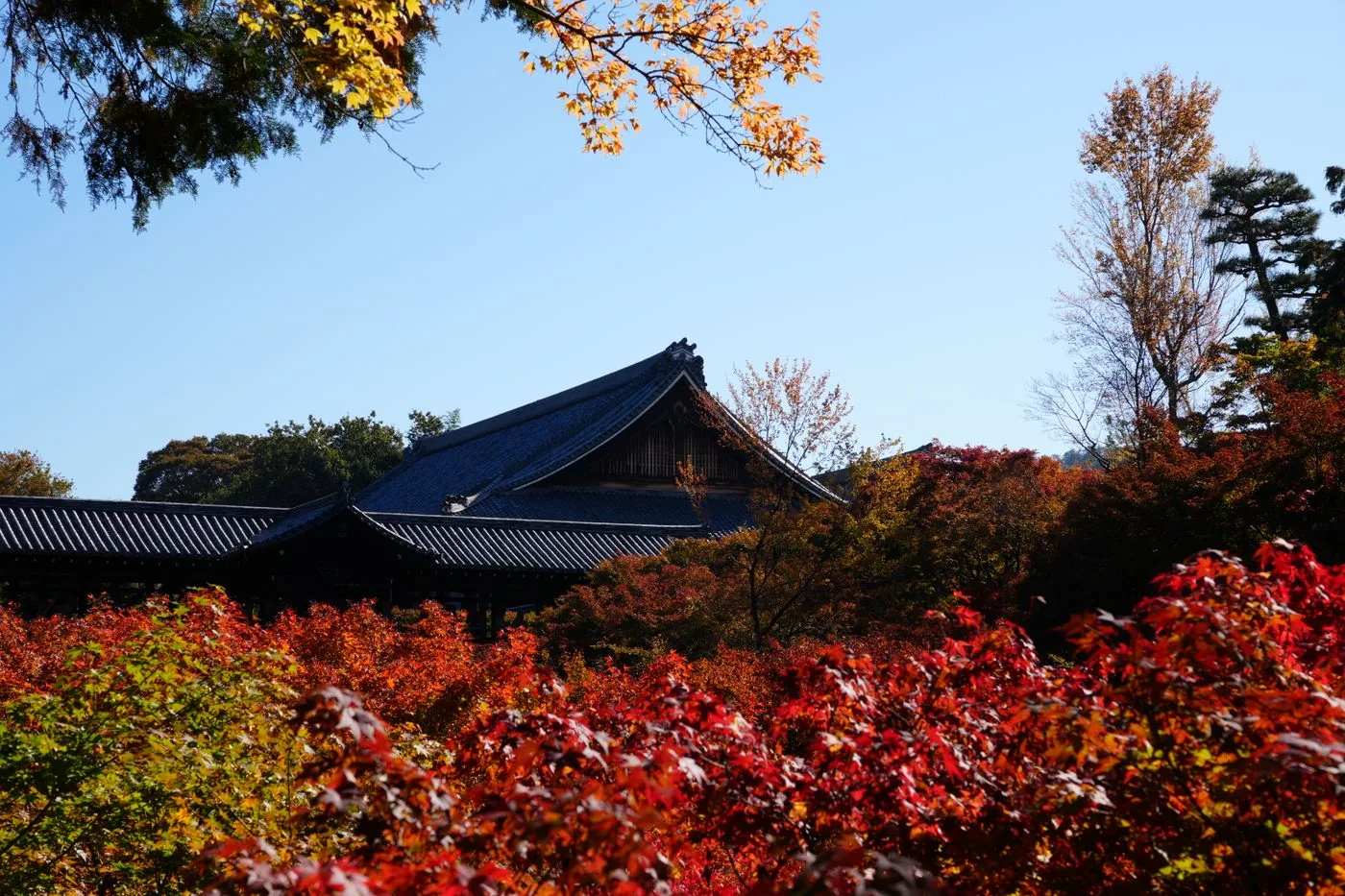
Quick answer
For the best balance of mild weather and lower seasonal crowd pressure, aim for roughly October 8–18. Early October is warmer, while late October brings cooler mornings and the first hints of fall color—but October 22 is Jidai Matsuri, and Kyoto's famous maple season usually does not peak until mid-to-late November.
October in Kyoto is really three different trips
Treating “October” as one weather-and-crowd block is the first planning mistake.
The month cools noticeably from start to finish. Japan Meteorological Agency climate normals for Kyoto show an average daytime high of 26.0°C (78.8°F) on October 1, falling to 20.4°C (68.7°F) by October 31. Average lows fall from 17.5°C (63.5°F) to 11.1°C (52.0°F) over the same period.
That is enough of a change to alter how you pack, how early you want to be outside, and whether a long temple day feels summery or crisp.
More importantly, Kyoto’s famous autumn color calendar runs later than many first-time visitors expect. The city’s official tourism information says leaves generally begin to change at the end of October, reach their peak around the middle of November, and pass peak toward the end of November. Some cooler areas—such as Takao, Ohara, and Mt. Hiei—change earlier.
So October gives you a useful trade-off: you can have excellent walking weather and avoid the biggest foliage-season pressure, but you usually cannot have that and peak maple color at the same time.
Early vs mid vs late October: the useful comparison
| Window | Typical daytime feel | Typical mornings | Foliage | Crowd pattern | Best for |
|---|---|---|---|---|---|
| Oct 1–10 | Warm, often 24–26°C highs | Mild, around 16–18°C early in the window | Mostly green | Busy at headline sights, but before foliage peak | Warm weather, long outdoor days |
| Oct 11–20 | Mild, around 22.6–24.4°C highs | Cooler, roughly 13–16°C | Mostly green, occasional early change | Best overall compromise | First-time visitors, walkers, crowd-sensitive travelers |
| Oct 21–31 | Crisp, around 20.4–22.4°C highs | Noticeably cooler, roughly 11–13°C | First color appearing, earlier in hills | Festival pressure Oct 22; interest rises toward November | Early fall atmosphere, photographers |
The numbers above are not a forecast for a specific year. They are long-term climate normals, which are much more useful for choosing a travel window months in advance than a short-range forecast would be.
The strongest all-round window: roughly October 8–18
If you are choosing dates with no special event or foliage requirement, this is the window I would target first.
By the second week of October, the intense summer feel has faded. JMA normals put daytime highs around 24.9°C on October 8, 24.2°C on October 12, and 23.0°C on October 18. Mornings cool gradually from roughly 16.2°C to 13.9°C across that span.
That matters in Kyoto because a good sightseeing day is often long and very pedestrian. A route such as Kiyomizu-dera → Sannenzaka/Ninenzaka → Gion → Yasaka Shrine is much more pleasant when you are not planning around heat.
At the same time, this period normally falls before the classic red-maple rush that intensifies in November. You should still expect queues and tour groups at Kyoto’s most famous sites—there is no truly empty season at Fushimi Inari or Kiyomizu-dera—but you are avoiding one of the city’s strongest seasonal tourism magnets.
Who should choose this window
Choose mid-October if your priority order looks like this:
- Comfortable all-day walking weather.
- Lower seasonal pressure than peak foliage season.
- Stable access to the city’s main sights without structuring the whole trip around one festival.
- You care more about Kyoto itself than about photographing peak red maples.
Early October: best if you want warmth
The first ten days are the better fit if you dislike chilly mornings or want to travel with a lighter wardrobe.
JMA normals show highs still around 26°C at the start of the month and around 24.5°C by October 10. That can feel warm in direct sun, especially during long uphill walks or crowded temple visits.
The advantage is simplicity. You can usually spend long periods outdoors without needing much more than a light layer for evenings. The trade-off is that you should expect landscapes to look much more like late summer/early autumn than the crimson Kyoto imagery used in travel marketing.
If your mental picture of the trip is “temples, food, neighborhoods, cycling, gardens,” early October works very well. If the picture is “red maple canopy everywhere,” it does not.
Late October: better atmosphere, but do not confuse it with peak foliage
Late October is where planning advice often becomes misleading.
Yes, the air is cooler. Yes, some leaves begin to change. Yes, the city can start to feel more distinctly autumnal. But Kyoto’s own tourism guidance places typical peak foliage around mid-November, with many well-known locations reaching their best color from the middle to late part of that month.
This means October 25–31 is a transition window, not a guaranteed peak-color window.
If you choose it for foliage, build the plan around areas that tend to change earlier rather than assuming central Kyoto will be fully red. Kyoto’s tourism information specifically notes that places such as Mt. Hiei, Ohara, and Takao tend to turn earlier.
That makes late October useful for travelers who prefer cooler weather and are happy to trade certainty for the chance of early color.
The date crowd-sensitive travelers should know: October 22
October 22 is Jidai Matsuri, one of Kyoto’s major annual festivals.
The historical procession runs from Kyoto Imperial Palace toward Heian Jingu Shrine and features around 2,000 participants in period costume. Kyoto’s official festival information lists the procession through central locations including Karasuma Marutamachi, Karasuma Oike, Kawaramachi Oike, Sanjo, and the approach to Heian Jingu.
That does not mean “do not visit Kyoto on October 22.” It means make the date intentional.
If the festival is something you want to see, it is a reason to choose the date. If your goal is quiet sightseeing, do not schedule your most important central-Kyoto walking day along the route and then wonder why movement feels harder than expected.
A useful planning split is:
- Festival traveler: stay central, reserve or identify a viewing spot, and let Jidai Matsuri be the main event of the day.
- Crowd-avoidance traveler: use October 22 for a different part of the city—northwest Kyoto, a quieter neighborhood, or a day trip—and keep your central route for another weekday.
Weekday strategy matters more than most “secret Kyoto” lists
There is a limit to what date selection can solve. Kyoto’s headline attractions are famous because they are genuinely worth seeing.
Instead of trying to discover a mythical empty version of Kiyomizu-dera at midday, change the timing.
For a four-day October trip, I would rather book Monday–Thursday or Tuesday–Friday than Thursday–Sunday, then use the first 60–90 minutes of the day for the place most vulnerable to crowds.
A practical pattern:
- Fushimi Inari: arrive early, then continue higher up the mountain instead of stopping at the first torii sections.
- Kiyomizu-dera / Higashiyama: start at opening time and walk downhill toward Gion as the streets fill.
- Arashiyama: make the bamboo grove the beginning of the day, not the destination of a 10:30 a.m. arrival.
- Kinkaku-ji: visit at opening or place it on a weekday rather than trying to “beat” crowds with a mid-afternoon slot.
The point is not to eliminate people. It is to avoid spending your limited Kyoto hours inside the densest part of the daily crowd curve.
If you want foliage more than lower crowds, move the trip into November
This is the most useful answer for some travelers: October may simply be the wrong month for your priority.
Kyoto’s official tourism guidance says November is the best period for the city’s maple leaves, and the city’s autumn leaf calendar shows many popular spots historically peaking from mid-to-late November.
If full red foliage is one of the top two reasons you are booking Kyoto, do not choose October only because a generic guide called it “fall season.” Move the trip later and accept the higher demand.
Conversely, if you would rather walk through Kyoto in comfortable weather without organizing your entire day around foliage hotspots, October is arguably the smarter choice.
My date recommendation by priority
| Your priority | Dates I would target | Why |
|---|---|---|
| Best overall balance | Oct 8–18 | Mild days, cooler mornings, before the main foliage rush |
| Warmest weather | Oct 1–10 | Highs still roughly 24.5–26°C |
| Cooler walking weather | Oct 20–31 | Highs trend toward 20–22°C late month |
| First hints of fall color | Oct 25–31 | Color begins appearing, especially in cooler areas |
| Peak red maple foliage | Move to mid/late November | October is usually too early for central Kyoto peak |
| Avoid festival disruption | Do not center your sightseeing on Oct 22 | Jidai Matsuri uses a major central procession route |
What I would actually book for a first Kyoto trip
For a first visit with four full sightseeing days, I would choose a weekday-heavy stay around October 13–18 if airfare and hotel prices were comparable.
That decision is not because those dates are magically empty. They are not.
It is because they combine several small advantages:
- afternoon temperatures are normally comfortable rather than hot;
- mornings are cool enough to make early starts pleasant;
- you are still ahead of the main November foliage surge;
- you are not relying on uncertain late-October leaf timing;
- you are clear of October 22’s Jidai Matsuri unless you deliberately extend the trip for it.
That is a more robust planning decision than trying to guess the single “least crowded” day of an internationally famous city months in advance.
Sources and how to use them
For weather planning, use the Japan Meteorological Agency’s 1991–2020 Kyoto climate normals rather than travel-blog averages. They show how temperatures change day by day across October.
For foliage and event timing, use Kyoto City Official Travel Guide / Kyoto Online Tourist Information Center. Their guidance is especially useful because foliage timing varies by year and by elevation; check the live autumn-leaf calendar again close to your trip.
- Japan Meteorological Agency — Kyoto October climate normals
- Kyoto Travel — Seasonal Information
- Kyoto Tourist Information — When autumn leaves peak
- Kyoto Travel — Autumn Leaves Calendar
- Kyoto Travel — Jidai Matsuri Festival
If your dates are fixed, the next useful step is not another “best time to visit Kyoto” article. Build the days themselves: here is a realistic way to split four days in Kyoto, and here is what those four days are likely to cost.
What changes this answer
- Temperature drops steadily across the month: Japan Meteorological Agency normals go from about 26°C highs / 17.5°C lows on October 1 to about 20.4°C / 11.1°C on October 31.
- Autumn color is not the main reason to choose October: Kyoto's official tourism guidance says leaves usually begin changing at the end of October and peak around mid-November.
- October 22 is Jidai Matsuri, one of Kyoto's major annual festivals, with a large historical procession and localized crowding along the route.
- Weekends still matter. Even outside peak foliage season, major sights such as Kiyomizu-dera, Fushimi Inari, Arashiyama, and Kinkaku-ji are easier early in the day and on weekdays.
- Higher-elevation areas such as Takao, Ohara, and around Mt. Hiei can show color earlier than central Kyoto, so late October works better if foliage matters more than quiet streets.
Recommendation by traveler profile
Best overall compromise
Choose roughly October 8–18. Days are still pleasantly warm, mornings are cooler but not cold, and you avoid both the late-November foliage rush and the October 22 festival spike.
Warm-weather traveler
Choose October 1–10. Climate normals are around 24.5–26°C for daytime highs early in the month, which is comfortable for long outdoor days if you do not mind warmer afternoons.
Fall-color seeker
Choose October 25–31 only if you are happy with early or partial color rather than Kyoto's classic full-red-maple look. Prioritize Takao, Ohara, Kurama/Kibune, or higher-elevation areas.
Crowd-sensitive traveler
Favor Tuesday–Thursday stays, start major temples at opening time, and avoid building your most important sightseeing day around October 22.
Frequently asked questions
Is October a crowded month in Kyoto?
Yes, Kyoto is popular in autumn, but October generally sits before the city's strongest maple-leaf demand, which Kyoto's official tourism guidance places mainly in November. Crowding is still very noticeable at headline sights, weekends, and around major events.
Will I see red autumn leaves in Kyoto in October?
Possibly at the end of the month and earlier in higher or cooler areas, but do not plan an October trip expecting full peak color across central Kyoto. Official Kyoto guidance says color usually starts at the end of October and peaks around mid-November.
What should I pack for Kyoto in October?
Bring layers. Early October can still feel warm in the afternoon, while late October mornings can be close to 11–13°C. A light jacket or overshirt, breathable daytime layers, and comfortable walking shoes cover most conditions.
Is October 22 a bad day to visit Kyoto?
Not necessarily—it can be an excellent day if you want to see Jidai Matsuri. It is a poor choice only if your priority is avoiding crowds and traffic disruption around the procession route.
Related downloadable
The matching printable for this guide is in progress — browse the Checklists & Printables library for other ready-to-use downloads.
Browse Checklists & Printables