New Zealand vs The Uyuni Salt Flat: Which Fits Your Trip Better?
Quick answer
Choose New Zealand if you have at least 8-14 days, want varied landscapes and walks, and prefer a trip you can shape around a self-drive or structured route. Choose Salar de Uyuni if you want one extraordinary, concentrated landscape inside a wider Bolivia or South America trip and can manage high altitude, remote 4WD touring and less predictable logistics. For the mirror effect, target the rainy period but accept that water can restrict access; for the dry salt polygons and wider vehicle access, choose the dry season.
These are not substitutes for the same trip
New Zealand and Salar de Uyuni appear together on bucket lists because both produce enormous, almost unreal landscapes.
That is where the similarity ends.
New Zealand is a country-scale journey made from roads, towns, coastlines, mountains, forests, Māori culture and many separate decisions. Salar de Uyuni is a concentrated high-altitude encounter with one vast environment, often combined with lagoons, volcanoes, desert and geothermal terrain on a guided 4WD circuit.
The useful question is not which place is more beautiful.
It is:
Which trip structure fits your available time, body, season and tolerance for logistical uncertainty?
The decision at a glance
| Choose… | When this sounds like you |
|---|---|
| New Zealand | You have 8-14+ days, want variety and walking, and enjoy building a directional road trip or structured multi-stop route |
| Salar de Uyuni | You want one visually singular expedition, can acclimatize to high altitude and accept a tour-led remote experience |
| New Zealand | You need private-room comfort, flexible food and the ability to change the plan independently |
| Salar de Uyuni | Minimal horizons, salt geometry or the mirror effect are the central reason for traveling |
| Neither yet | Your schedule leaves no acclimatization for Bolivia and no meaningful route time for New Zealand |
Time: country journey versus concentrated expedition
New Zealand
A first nature trip should normally focus on one island or one defined corridor.
Our five-day versus eight-day New Zealand comparison shows the difference: five days can connect Christchurch, Tekapo, Aoraki/Mount Cook and Queenstown, but eight days finally creates room for Wānaka, second nights and a weather buffer.
Fourteen days allows a much stronger nature route. It still does not mean every famous place on both islands belongs in the plan.
Salar de Uyuni
A standard decision is one-day salt-flat tour versus a two- or three-day southwest circuit.
The one-day version concentrates on the salar and nearby stops. A longer circuit may add high-altitude lagoons, volcanic landscapes, flamingos, desert and geothermal areas, with basic nights and long vehicle days.
But “three-day tour” is not “three-day trip.”
You also need:
- travel to Bolivia and Uyuni;
- acclimatization time;
- a buffer around vulnerable transfers;
- at least one night that is not spent arriving exhausted immediately before the tour;
- time for the rest of Bolivia or a cross-border Atacama route if that is the real journey.
Time verdict: Uyuni fits more easily into a shorter itinerary, but only when acclimatization and access are counted honestly.
Season: what photograph are you actually choosing?
Salar de Uyuni has two visually different identities.
Wet conditions and the mirror effect
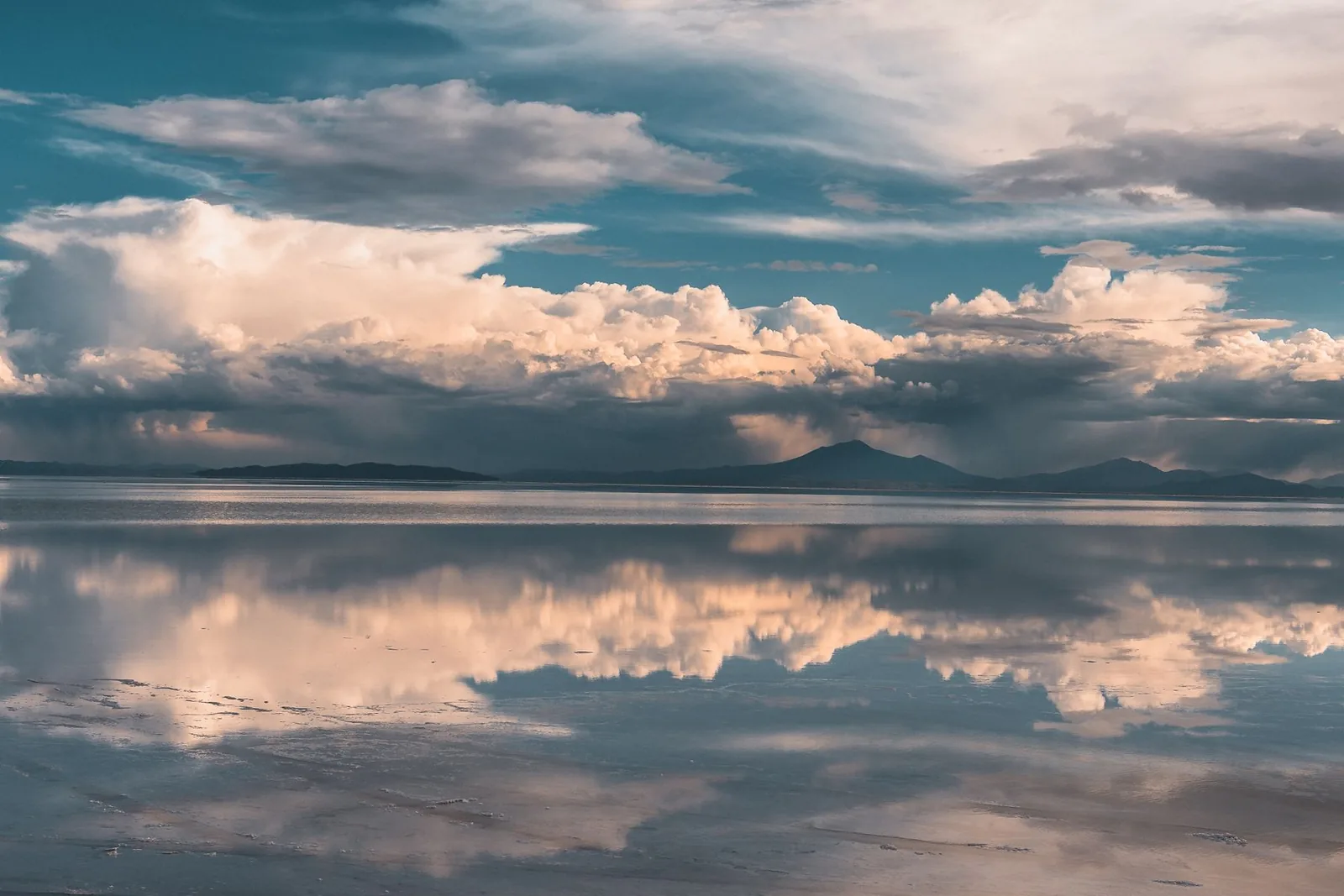
A thin layer of water can turn the surface into an enormous reflection. January and February are commonly described as the best chance, but there is no ticket that guarantees a mirror at a specific hour.
Rain creates the effect and the compromise:
- flooded areas may become inaccessible;
- Isla Incahuasi or parts of a longer route may be excluded;
- departure and driving plans can change;
- boots and salt-water protection become relevant;
- clouds may create drama or obscure the light you imagined.
Do not book the wet season while expecting the full dry-season route as well.
Dry salt, polygons and access
During drier months, the landscape becomes a hard white expanse with geometric salt patterns. Vehicle access is generally broader, and the classic perspective photographs become easier to stage.
Cold, wind and intense sun remain important, particularly in the austral winter and on multi-day high-altitude routes.
New Zealand’s seasonal choice
New Zealand is less binary. The country changes across region and elevation, and weather can move quickly in any season.
Summer brings long daylight and demand. Spring and autumn can create quieter routes and mixed weather. Winter changes alpine access, driving and the equipment required.
Rather than choosing one signature phenomenon, you choose which activities and regions are appropriate for the month.
Season verdict: Choose Uyuni when a specific salt-flat state matters; choose New Zealand when you want to assemble a route from multiple landscapes and seasonal options.
Altitude: the question that can decide the trip
Uyuni is at approximately 3,650 metres above sea level. Multi-day southwest routes may travel considerably higher.
That changes the decision before aesthetics enter it.
Altitude illness cannot be predicted simply from fitness. A very fit traveler can become unwell. Headache, nausea, unusual fatigue, dizziness and disturbed sleep should not be treated as inconveniences to push through, and severe symptoms require descent and medical attention.
Plan to:
- acclimatize before the remote tour;
- avoid a punishing itinerary immediately after arrival;
- discuss the trip with a clinician if you have relevant health concerns;
- confirm what the operator does when a guest becomes unwell;
- maintain hydration without assuming water prevents altitude illness;
- know that remote accommodation is not the place to discover you needed a different plan.
New Zealand has alpine environments and serious outdoor hazards, but the normal road-trip bases do not impose Uyuni’s constant high-altitude exposure.
Altitude verdict: If altitude is medically unsuitable or personally anxiety-producing, choose New Zealand. Uyuni should not be a test of toughness.
Independence: how much control do you want?
New Zealand gives you a system to shape
Travelers can self-drive, use coaches, take domestic flights, join day tours or build a mixed route.
That freedom comes with responsibility:
- driving on the left;
- allowing longer than the map estimate;
- checking NZTA road information;
- respecting track closures and DOC alerts;
- carrying proper outdoor equipment;
- changing plans when weather becomes unsafe.
You decide how long to stay and which walk replaces a closed one.
Uyuni gives the operator more control
The salt flat and remote southwest circuit are 4WD environments. Government travel advice warns that Bolivia has poor road conditions and that adventure tourism, including Salar de Uyuni, lacks universal minimum operator standards.
Use a well-established company and verify:
- vehicle condition and seat count;
- driver experience and working hours;
- guide language and whether the driver is also the guide;
- accommodation standard;
- meals, water and sleeping arrangements;
- emergency communication and first aid;
- oxygen policy without treating oxygen as a substitute for descent;
- route changes in rain or snow;
- cross-border process if ending in Chile;
- recent reviews that describe safety, not only friendliness.
The cheapest jeep seat is not automatically the best-value choice.
Independence verdict: New Zealand suits travelers who want to steer the itinerary. Uyuni suits travelers comfortable handing more operational decisions to a vetted local team.
Comfort: what does “nature trip” mean to you?
New Zealand can be rugged by day and comfortable at night. Even a hiking-focused route may return to a motel, apartment, holiday park or lodge with a private bathroom and reliable power.
Uyuni offers comfortable salt hotels at the edge of the salar, but many multi-day circuits use simple remote accommodation. Depending on the tour, travelers may encounter:
- shared rooms or bathrooms;
- limited hot water;
- cold nights;
- basic meals;
- limited charging;
- long vehicle days;
- dust and salt;
- no rapid exit when uncomfortable.
Ask for the exact accommodation names rather than accepting “basic hotel” or “salt hostel” as a full description.
Comfort verdict: New Zealand offers a wider controllable range. Uyuni rewards travelers whose desire for the landscape outweighs a few remote and basic nights—or who budget for a private, higher-comfort tour.
Cost: compare complete journeys, not headlines
A Uyuni tour may appear dramatically cheaper than two weeks in New Zealand. It should: one is a one- to three-day product and the other is an entire country itinerary.
For Uyuni, price:
- international and regional flights;
- La Paz, Sucre, Potosí, Atacama or other route nights;
- travel to Uyuni;
- acclimatization;
- tour level and private-room supplements;
- border or onward transport;
- travel insurance appropriate to altitude and remote activities;
- contingency for disrupted transport.
For New Zealand, price:
- 8-14 nights;
- rental car or campervan and insurance;
- fuel and inter-island transport if relevant;
- food;
- walks, huts and premium nature activities;
- one-way fees and weather flexibility.
Our New Zealand nature-trip budget gives realistic 14-day planning ranges and explains why a campervan is not automatically cheaper.
Cost verdict: Uyuni is often the lower-cost headline experience. New Zealand can be the better value when you want a complete, varied holiday rather than one iconic landscape.
The experience itself
New Zealand feels cumulative
The trip becomes meaningful through contrast:
- alpine valleys after glacial lakes;
- rainforest after dry high country;
- a coastal walk after several driving days;
- Māori places and stories within landscapes that should not be treated as empty scenery;
- free walking days between expensive experiences.
The reward grows across the route.
Uyuni feels elemental
The salar removes visual clutter. Horizon, salt, sky, cold and distance dominate.
A longer circuit expands that elemental feeling through desert, colored lagoons, wildlife and volcanic terrain. The trip can feel less like sightseeing and more like crossing a landscape that does not care whether visitors are comfortable.
The reward is concentration.
Experience verdict: Choose New Zealand for variety and movement. Choose Uyuni for scale, minimalism and one landscape that changes your sense of distance.
Photography: reality behind the saved image
Choose Uyuni for photography only after deciding which version you want:
| Desired image | Better conditions | Tradeoff |
|---|---|---|
| Sky reflection | Water on the salt, often most likely in the rainy period | Routes and islands may be inaccessible |
| White geometric polygons | Dry conditions | No guaranteed mirror |
| Perspective illusions | Dry, open surface | Strong midday light and busy tour stops |
| Sunset reflection | Wet surface plus cooperative sky and access | Natural conditions cannot be scheduled |
New Zealand photography is less dependent on one surface condition but more distributed. Aoraki may be clouded, Milford may be raining and a famous viewpoint may have poor light; another region or day can still succeed.
Do not choose either destination because one edited image promised repeatable weather.
Who should choose New Zealand?
Choose New Zealand if most of these are true:
- you have at least 8-14 days;
- hiking and landscape variety matter;
- you want control over accommodation and food;
- a road trip sounds enjoyable rather than exhausting;
- altitude is a concern;
- you prefer backup choices when weather changes;
- the journey itself matters as much as one icon.
Who should choose Salar de Uyuni?
Choose Uyuni if most of these are true:
- the salt flat is the specific landscape you dream about;
- Bolivia or the Atacama is already part of the route;
- you can allow responsible acclimatization;
- you accept cold, basic conditions and long 4WD days;
- you are willing to research an operator beyond price;
- you understand that the mirror effect is conditional;
- one concentrated expedition appeals more than a multi-stop road trip.
My decision framework
Complete these lines before opening booking sites:
- My available door-to-door days: ______
- My actual month of travel: ______
- My altitude suitability and acclimatization plan: ______
- My non-negotiable experience: ______
- My tolerance for basic remote accommodation: low / medium / high
- My preferred control level: independent / mixed / fully guided
- My complete trip estimate from home: ______
- What I am willing to miss: ______
Then decide:
My choice is ______ because ______ matters more to me than ______.
If the sentence depends only on “the photos look better,” the decision is not finished.
Final verdict
New Zealand is the stronger choice for a substantial, flexible nature holiday. It asks for more days and usually more money, but offers variety, independence and multiple ways for the trip to succeed.
Salar de Uyuni is the stronger choice for a short, singular expedition inside a thoughtful Bolivia or South America itinerary. It asks for less touring time but more respect for altitude, remoteness, operator quality and seasonal uncertainty.
Choose New Zealand when you want a journey.
Choose Uyuni when you want an encounter.
Sources and live checks
- Tourism New Zealand: trip planning
- Tourism New Zealand: outdoor safety
- Government of Canada: Bolivia travel advice
- CDC: Bolivia traveler health
Current entry rules, health advice, transport conditions, operator availability and weather can change. Check official guidance and individual medical advice before booking.
What changes this answer
- New Zealand is a country-scale journey; Uyuni is a destination-scale expedition usually lasting one to three days inside a wider trip.
- Uyuni sits at roughly 3,650 metres and multi-day routes may climb higher, making altitude a primary suitability question rather than a minor inconvenience.
- The Uyuni landscape changes seasonally: surface water can create reflections but may close routes, while dry conditions reveal salt polygons and usually permit broader access.
- New Zealand offers more independent planning, but long distances, left-side driving and fast-changing outdoor weather still require preparation.
- Uyuni depends heavily on the quality, vehicle and judgment of the chosen operator; New Zealand costs are driven more by accommodation, vehicle days and paid experiences.
Recommendation by traveler profile
Traveler with 4-6 days
Choose Uyuni only as part of a practical Bolivia itinerary with time to acclimatize. Do not fly into high altitude and rush directly into a remote multi-day tour.
Traveler with 8-14 days
Choose New Zealand for a focused one-island route, or Uyuni if the salt flats are one component of a broader Bolivia or Atacama journey.
Hiking-first traveler
Choose New Zealand for a larger range of independent day walks and multi-day tracks, provided you plan for weather and outdoor safety.
Photography-first traveler
Choose Uyuni if minimal horizons, scale and reflections are the priority, but make the decision using the seasonal tradeoff rather than one viral mirror photograph.
Traveler sensitive to altitude or basic conditions
New Zealand is generally the easier fit. Discuss high-altitude travel with an appropriate clinician before committing to Uyuni.
Frequently asked questions
Which destination needs more time?
New Zealand. Eight days is a useful minimum for one focused route and 14 days is more comfortable. Uyuni tours commonly occupy one to three days, although reaching Bolivia, acclimatizing and building a responsible wider itinerary require additional time.
When does Salar de Uyuni look like a mirror?
A shallow layer of rainwater creates the reflection. January and February often offer the best chance, but it is a natural condition rather than a guaranteed attraction, and too much water can restrict access.
Is Uyuni suitable as a first stop after flying into Bolivia?
Not for everyone. Uyuni is around 3,650 metres and some multi-day routes travel substantially higher. Allow acclimatization and seek individual medical advice if altitude may be a concern.
Which trip is easier without a tour?
New Zealand. Self-drive, coach and independent walking options are extensive. Uyuni's remote salt-flat and southwest circuit should be approached with a well-established operator and an appropriate vehicle.
Which destination is cheaper?
Uyuni is usually the smaller trip component, but comparing one tour with an entire New Zealand journey is misleading. Compare complete trips from your origin, including flights, acclimatization nights, transfers, insurance and the rest of the itinerary.
Related downloadable
The matching printable for this guide is in progress — browse the Checklists & Printables library for other ready-to-use downloads.
Browse Checklists & Printables