How to Avoid Overtourism Traps in Vermont
What this guide solves
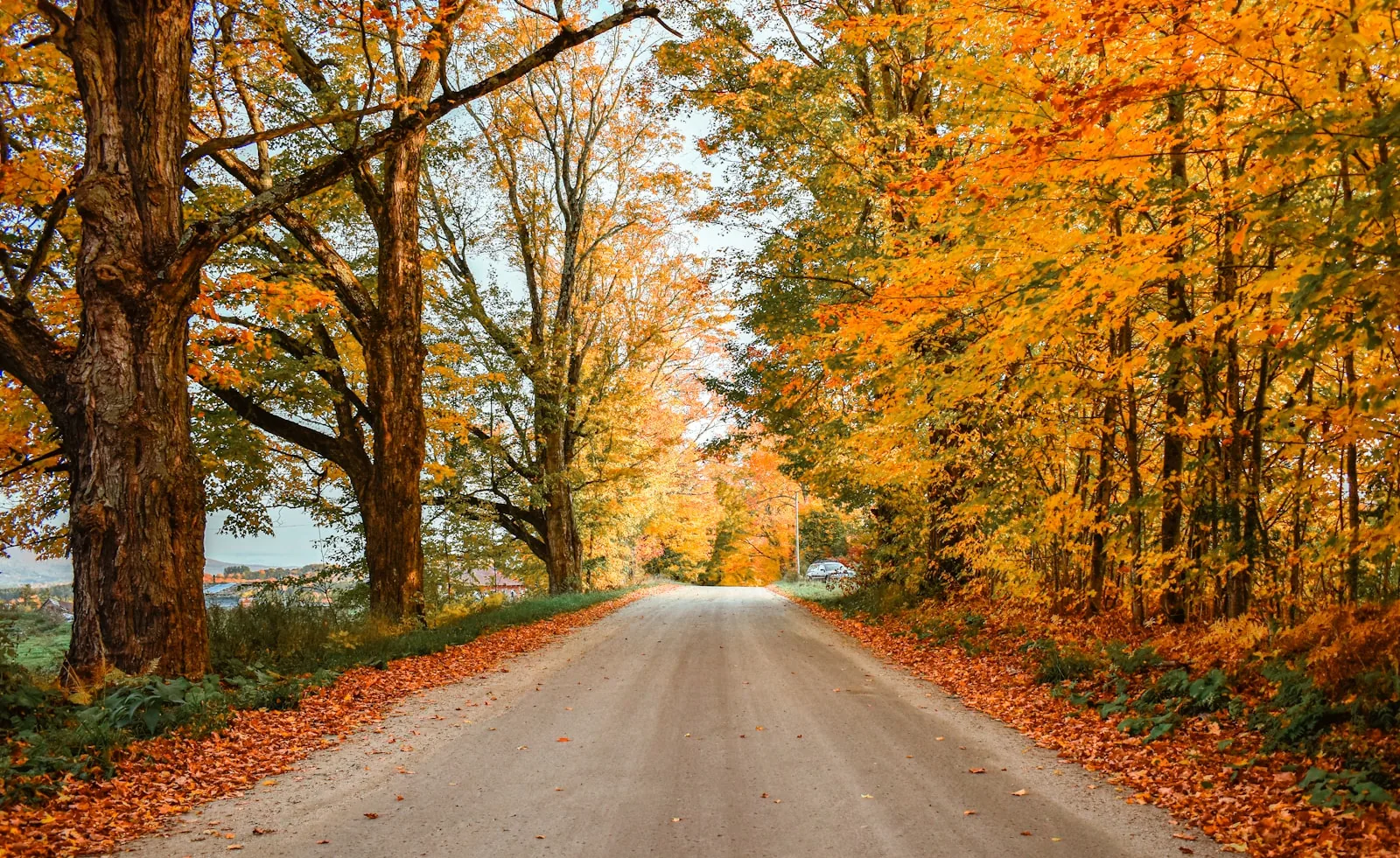
Vermont’s most famous fall images create a strange planning problem.
You see one covered bridge, one white church, one perfect road through red maples — and suddenly thousands of travelers are trying to stand in roughly the same handful of places at roughly the same time.
That does not mean Vermont has an overtourism problem everywhere.
It means a small number of photogenic towns, roads and viewpoints can become disproportionately busy while enormous parts of the state remain calm.
The useful goal is not to “avoid tourists.” You are a tourist too.
The goal is to avoid building a trip around places whose popularity now overwhelms the experience you came for.
Quick answer
If you want Vermont without the worst crowding, use this system:
- Choose a region first, not a famous town first.
- Stay two or three nights in one base instead of chasing icons statewide.
- Visit headline stops early, late, or midweek.
- Use scenic byways and gap roads to create your own sequence of smaller stops.
- Treat downtowns, farms, trailheads and general stores as part of the trip — not filler between Instagram locations.
- Check the official foliage report near departure and follow the color, not a rigid viral itinerary.
Vermont Tourism divides the state into 14 regions and highlights 10 federally designated scenic byways. That is a clue: Vermont is much bigger, experientially, than Stowe + Woodstock + one covered bridge.
Trap #1: planning the whole trip around three famous towns
There is nothing wrong with Stowe or Woodstock.
The problem begins when your itinerary looks like this:
Burlington → Stowe → Woodstock → Sleep → drive somewhere else → repeat.
You spend the trip moving between names you recognize rather than experiencing one landscape deeply.
A better model is:
Choose one anchor region and build outward.
For example:
- Upper Green Mountains: Stowe, Waterbury, Morrisville, Smugglers’ Notch, nearby hikes and farm stops.
- Champlain Valley: Middlebury, Bristol, gap roads, farmland, lake views and smaller downtowns.
- The Shires: Manchester, Bennington, Dorset and southern mountain roads.
- Northeast Kingdom: a more rural, spacious trip where the drive itself becomes the experience.
This immediately reduces backtracking and naturally spreads your spending beyond the same few places.
Trap #2: believing Route 100 is the only scenic road in Vermont
Route 100 is famous for a reason.
It links mountain towns, ski areas and long stretches of forest, and the Green Mountain Byway around Stowe and Waterbury is genuinely beautiful.
But Vermont Tourism lists 10 designated scenic byways across the state.
That means your trip does not fail if you are not crawling down the same stretch of road as everyone else during peak foliage.
Alternatives include:
- Lake Champlain Byway.
- Connecticut River Byway.
- Molly Stark Byway.
- Stone Valley Byway.
- Smaller gap-road loops in the Champlain Valley.
The Champlain Valley, in particular, has mountain-pass roads such as Middlebury Gap, Appalachian Gap and Lincoln Gap that Vermont Tourism describes as less trafficked than better-known foliage drives while still offering strong scenery.
That is exactly the kind of tradeoff a useful itinerary should exploit.
Trap #3: arriving at the most photographed places at noon
The crowd problem is often not the place.
It is the time.
A scenic town at 7:45 a.m. and the same town at 12:30 p.m. on a peak Saturday can feel like two different destinations.
Use famous stops in the least-famous time slots:
- Downtown walk before breakfast.
- Covered bridge early morning.
- Popular overlook late afternoon.
- Farm stop on a weekday rather than Saturday midday.
- Lunch at 11:30 or 2:00 instead of the central rush.
Then use the middle of the day for a scenic drive, trail, museum, orchard, lake or smaller town.
This is not glamorous advice. It is extremely effective.
Trap #4: treating every roadside photo as a legitimate stopping place
This is one of the biggest behavioral problems during foliage season.
A beautiful barn, private lane or field appears on social media. Travelers arrive. Someone parks partly in the road. Others walk onto private property for the same photograph.
Even when a location looks public, do not assume a shoulder, driveway, farm field or residential road is a visitor attraction.
Use designated pull-offs, public parking and actual visitor sites.
If there is nowhere safe and legal to stop, keep driving.
Vermont has no shortage of scenery.
You do not need to endanger traffic or annoy residents for one frame.
Trap #5: chasing “peak foliage” as though it were one fixed weekend
Peak foliage is not a statewide appointment.
The official Vermont foliage reporting system tracks how color progresses through different elevations and regions each autumn. Northern and higher areas can be further along while valleys and southern areas still have substantial color later.
So instead of building the entire trip around one promised “peak weekend,” do this:
- Reserve accommodation in a region that gives you several route options.
- Check the official foliage report shortly before departure.
- Decide your exact driving day once you know where the color is strongest.
- Keep one flexible day for weather and foliage conditions.
This improves the trip and also prevents everyone from converging on one supposedly perfect place.
Trap #6: collecting covered bridges
Vermont has around 100 historic covered bridges.
You do not need twelve of them.
Pick one or two that sit naturally on your route.
The fifth covered bridge is unlikely to be five times more memorable than the first.
What often makes a Vermont day better is the sequence around it:
small downtown → bakery → scenic road → bridge → short walk → farm stand → dinner
That is a travel day.
Driving 180 miles to photograph five near-identical structures is a scavenger hunt.
Trap #7: choosing restaurants and shops only because they are famous online
A viral cider doughnut can be excellent.
It can also require 40 minutes in line while another bakery ten miles away serves something equally good without the circus.
Use popular names selectively.
A strong rule is:
One famous stop per day is enough.
Then let the rest of the day be regional.
Buy cheese where you happen to pass a farm shop. Eat lunch in the town where your walk ends. Stop at the general store whose sign catches your eye.
That is not settling for second best.
It is often where the trip becomes yours.
A better 3-day fall pattern
Here is what this strategy looks like in practice.
Day 1 — your anchor town + nearby landscape
- Arrive early enough to walk the center before the busiest period.
- Have one famous experience if you care about it.
- Spend the afternoon on a nearby local loop, not driving to another major destination.
- Eat and sleep in the same region.
Day 2 — scenic road day
- Use a designated byway or gap-road loop.
- Pick 3–4 legitimate stops with parking.
- Add one short walk, farm, museum or orchard.
- Leave enough time for spontaneous stops.
Day 3 — quieter town + nature
- Choose a smaller downtown or trail area.
- Build the day around one activity rather than a list of photo locations.
- Leave before dinner or stay for one last night instead of adding a long late-day transfer.
This is slower on paper and much richer in reality.
When the famous place is still worth it
Avoiding overtourism traps does not mean avoiding everything popular.
Stowe is worth visiting if you want Stowe.
Woodstock is worth visiting if its architecture and setting matter to you.
Smugglers’ Notch can be worth the traffic if that drive is one of your personal priorities.
The mistake is assuming popularity equals obligation.
Ask one question:
Would I still want to do this if nobody else could see the photo?
If yes, go — just time it intelligently.
If no, remove it.
The crowd-aware decision table
| If your priority is… | Better strategy |
|---|---|
| Classic Vermont icons | Visit 1–2 famous places early or midweek |
| Fall color | Follow the official foliage report, not one viral town |
| Quiet scenic driving | Use regional byways and gap roads |
| Small-town atmosphere | Stay overnight instead of day-tripping through |
| Photography | Sunrise / early morning + legal pull-offs |
| Local food | Choose by geography, not follower count |
| Relaxed trip | Two bases maximum for a week |
The best anti-crowd tool is geography
Most overtourism advice focuses on timing.
Timing helps.
But geography helps more.
Vermont Tourism’s own regional structure makes this obvious: the state contains distinct valleys, mountain zones, rural northern areas, southern historic towns and lake country.
You do not have to fight for one view when the whole state is producing autumn scenery.
Use the famous places as punctuation marks, not as the entire sentence.
Before you leave each morning
Check five things:
- Official foliage report if traveling in fall.
- Weather.
- Road conditions / seasonal closures for mountain roads.
- Parking information for your one high-demand stop.
- One quieter alternative nearby.
That final backup matters.
If you arrive and the experience feels absurdly crowded, you are allowed to leave.
Your vacation is not a compliance exercise.
Final rule
The best Vermont trip is rarely the one where you successfully reproduce every famous photograph.
It is the one where you stop noticing your checklist.
See the famous church if you love it. Drive the famous road if it matters to you. But give most of the trip to the landscapes, towns and small discoveries that do not require queuing for permission to enjoy them.
That is not just better crowd management.
It is usually better travel.
Planning sources
For current trip planning, use the official Vermont regions guide, Vermont scenic byways, and the official fall foliage report. These are more useful near departure than any fixed list of “secret” spots because conditions and crowd patterns change.
Related downloadable
The matching printable for this guide is in progress — browse the Checklists & Printables library for other ready-to-use downloads.
Browse Checklists & Printables