The Scottish Highlands on a Budget: What $70/Day Actually Buys You
Quick answer
Yes — but only if you treat $70/day as a deliberate target rather than a guaranteed daily cost. The workable version is a hostel bed booked ahead, simple self-catered food, public transport, free hikes and viewpoints, and very selective paid attractions. The budget gets fragile fast if you add private rooms, taxis, whisky tours, ferries, or multiple ticketed attractions in the same day.
The $70/day version of the Highlands is not a mini road trip
The biggest mistake in a “Scotland on $70 a day” article is pretending the Highlands behave like a compact European city. They do not.
Inverness to Skye, Inverness to Fort William, Aviemore to the Cairngorms and Fort William to Glencoe are all separate transport decisions. The landscape is enormous, the roads are slow, and the cheapest way to see it is not to move constantly.
A realistic low-budget trip is built around bases. Stay two or three nights in one town. Use the buses and trains that actually serve that area. Walk, hike and visit what sits naturally around it. Then move once.
That one change does more for the budget than skipping coffee for a week.
Build a range, not a fake-precise daily total
A $70 target is useful because it forces tradeoffs, but exchange rates, hostel prices and transport fares move. Instead of copying one exact set of prices months before your trip, build the day in four buckets:
| Category | Aim for | How to control it |
|---|---|---|
| Accommodation | roughly half the budget or less | Dorm/bunkhouse booked ahead |
| Food | about a fifth | Breakfast + lunch from a supermarket, one simple hot meal |
| Local transport | keep deliberately low | One transport corridor per day; compare current fares |
| Activities + buffer | whatever remains | Mostly free landscapes; choose paid sights selectively |
If accommodation is already consuming two-thirds of your target on your dates, the answer is not to pretend the rest will somehow fit. Change the base, dates, room type or overall budget.
Accommodation: where the budget is won or lost
Hostels, bunkhouses and simple self-catering stays are the natural fit for this budget. But the important part is not just “stay in hostels.” It is where you stay.
A slightly more expensive bed in Inverness with direct bus access to Loch Ness can be better value than a cheaper bed somewhere remote that forces you into taxis. Likewise, paying a little more to sleep in Fort William may save the cost and time of commuting into the area every morning.
For a no-car budget, prioritize:
- Inverness for Loch Ness, Culloden, Nairn and north/east Highland connections.
- Aviemore for Cairngorms access.
- Fort William for Glen Nevis, Glencoe connections and the West Highlands.
- Portree if Skye is central to the trip and you can secure affordable accommodation early.
Do not choose accommodation by nightly price alone. Choose it by total day cost from the front door.
Transport: check the route before you check the price
Bus promotions, fare caps and rail prices can change, so this guide deliberately does not build the trip around a temporary fare scheme.
The evergreen rule is more useful: identify the exact operator and service for the journey, check the current fare on the official site, and then check the return timetable before committing to the day.
Stagecoach operates many local Highland routes, Scottish Citylink is important on longer corridors, and ScotRail connects key rail towns. Some journeys are inexpensive; others are surprisingly costly. What matters most is that cheap transport does not make an impossible itinerary practical.
A bargain fare is still a bad plan if the service is too infrequent to support your day. Build the day from the timetable backward.
Food: availability matters as much as price
You do not have to live on instant noodles. A workable pattern is supermarket breakfast, a packed lunch, and one simple hot dinner.
The expensive pattern is arriving somewhere scenic and remote in the evening with no groceries and only one restaurant open. In the Highlands, food availability is a logistics issue as much as a budget issue.
When you reach a larger town, buy the next morning’s breakfast and lunch before you move on.
What you can actually do for free
This is the reason a lean Highlands budget is possible at all. Much of what people travel here to see does not have an admission gate.
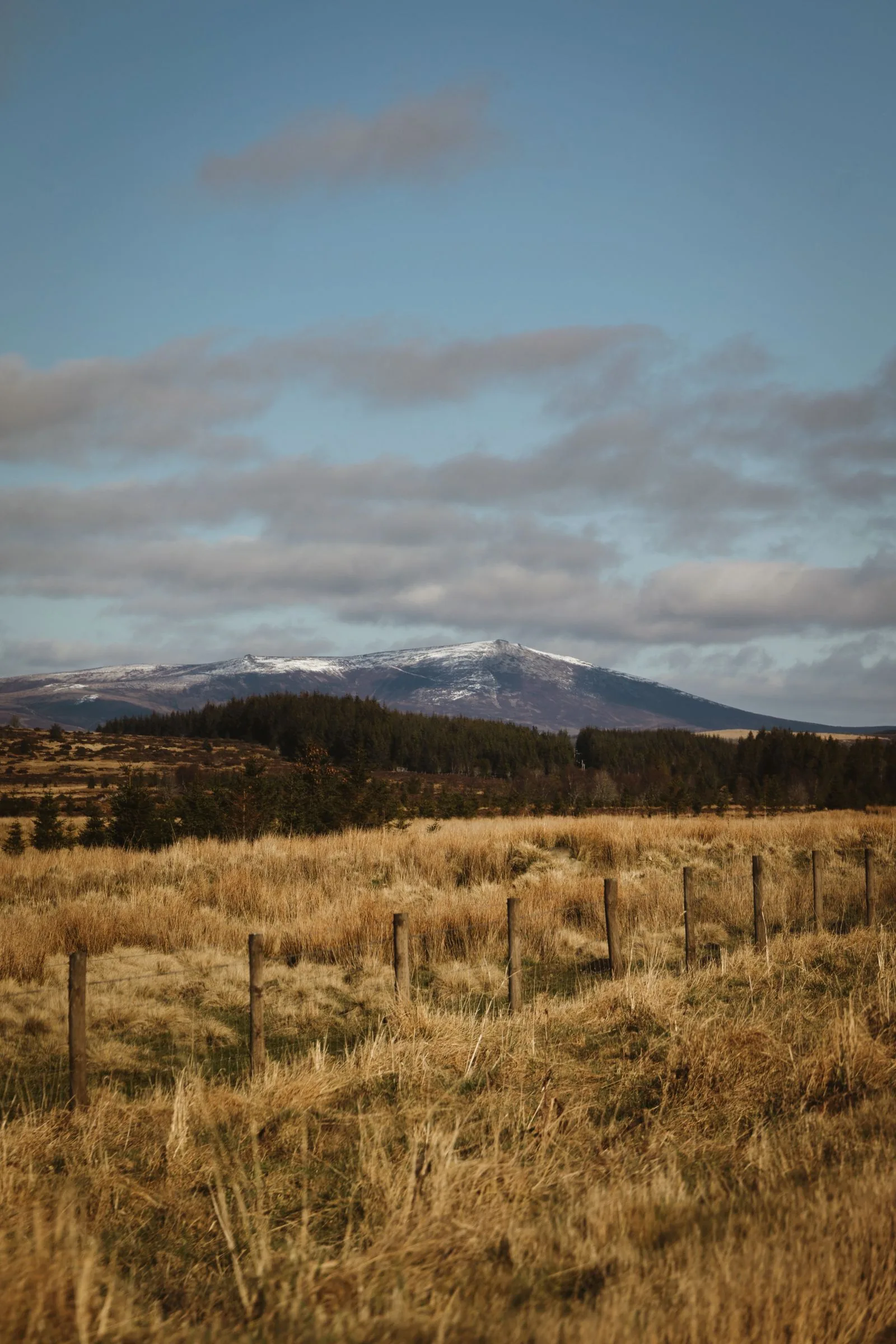
You can build full days around Glencoe viewpoints and walking routes, Glen Nevis, Cairngorms trails, Loch Ness viewpoints, beaches, waterfalls, coastal walks, Inverness and scenic public-transport journeys.
The trick is not to treat “free” as filler between attractions. In the Highlands, the landscape is the attraction.
Where paying is worth it
A strict budget does not mean refusing every ticket. It means choosing the paid experience that adds something you cannot get from a free viewpoint.
A castle, whisky tour or boat trip may be worth the splurge if it is one of the reasons you came. Check the current admission price on the official site and decide whether it earns its place in your itinerary.
One meaningful paid experience beats three mediocre ones squeezed into a budget day.
Three kinds of budget day
Low-spend day
Stay close to your base, use one local return journey at most, pack lunch and make a walk, glen, beach or viewpoint the main event. These days create room for occasional splurges.
Medium-spend day
Add one paid attraction or a longer public-transport journey, but not both plus a restaurant-heavy day. This is where a weekly budget works better than demanding the exact same spend every 24 hours.
High-spend day
Skye transfers, a tour, a boat trip, a whisky experience, a long rail journey or an expensive last-minute bed can push well beyond the target. Plan these days consciously rather than discovering them at checkout.
What $70/day does not comfortably buy
This budget starts breaking when you combine several of these: a private hotel room, daily restaurant lunches and dinners, a solo rental car, frequent taxis, organized tours on consecutive days, multiple ticketed attractions, or last-minute accommodation in the most popular areas.
You can have some of them. You cannot have all of them and still call it a $70/day trip.
The smarter five-day pattern
If I were trying to keep the Highlands near this budget, I would structure five days like this:
| Day | Base | Main plan | Spending level |
|---|---|---|---|
| 1 | Inverness | City + Ness Islands | Low |
| 2 | Inverness | Culloden / nearby excursion | Low |
| 3 | Inverness | Loch Ness + one paid attraction | Medium |
| 4 | Aviemore | Cairngorms hiking | Low |
| 5 | Aviemore | Second trail / scenic local day | Low |
What I would not do is Inverness → Skye → Glencoe → Fort William → Cairngorms in five days. That itinerary looks exciting on a map and expensive in real life.
The hidden budget cost: fragility
A lean Highlands itinerary has very little tolerance for mistakes. Miss the last bus and a taxi can destroy the day’s numbers. Arrive without groceries and you may have no cheap dinner option. Book accommodation late and the price you expected may no longer exist.
So the most useful budget advice is not “spend less.” It is: remove expensive failure points before the trip begins.
Book the beds. Screenshot the last bus. Check Sunday schedules separately. Carry food on rural days. Keep one emergency reserve outside the daily budget.
That is how a low-cost trip still feels like a holiday rather than a financial obstacle course.
Before you book: verify the moving parts
Use this article for the strategy, then check the current numbers for your dates on the official accommodation, transport and attraction sites. In particular, verify Stagecoach and Citylink bus fares and timetables, ScotRail fares, and admission prices for any paid sights you intend to visit.
The goal is for the planning logic in this guide to stay useful even when an individual ticket price changes.
What changes this answer
- Accommodation is the pressure point. Hostel and bunkhouse prices vary sharply by season and location, so booking early matters more than chasing a perfect nightly number.
- Public transport can be good value, but fares and promotions change. Check the current operator fare before building the budget.
- The Highlands are not one compact destination. A cheap day in Inverness can become an expensive day if you try to cover Skye, Glencoe and Loch Ness with taxis or ad-hoc tours.
- Many of the best experiences are free: glens, beaches, viewpoints and hiking trails. Paid attractions should be chosen, not accumulated.
- Weather changes spending. A wet day can push you toward cafés, indoor attractions and last-minute transport you did not plan for.
Recommendation by traveler profile
Solo backpacker
This is the traveler most likely to make the budget work. Base yourself in Inverness, Fort William or Aviemore, use dorm beds, buses and supermarket meals, and plan one main area per day.
Couple
Two dorm beds can cost nearly as much as a budget private room, so compare both before booking. The $70/day target is per person, not per couple.
Hiker
The Highlands can be excellent value because your main activity is often free. Spend more on location and transport, less on attractions.
Road-trip traveler
A rental car changes the economics completely once fuel, insurance and parking are added. This article's $70/day model assumes public transport.
Frequently asked questions
Is $70 a day enough for the Scottish Highlands including accommodation?
It can be with a well-priced dorm bed, but there is little slack. Treat $70 as a planning target and compare current accommodation prices for your dates before deciding it is realistic.
Do I need a car to see the Highlands?
No, but you need to choose your route around transport rather than around a map. Inverness, Fort William and Aviemore make much easier public-transport bases than trying to link every scenic point in one trip.
What is the best place to save money?
Transport and activities. Compare current bus and rail fares before travel, and remember that many hikes, beaches and viewpoints cost nothing.
What expense blows the budget fastest?
Taxis and last-minute accommodation. The Highlands are rural, distances are deceptive, and a missed connection can turn a cheap day into an expensive one.
Should I buy an attraction pass?
Only if the maths works for your exact itinerary. Compare the current individual admission prices with the current pass price rather than assuming a pass is automatically cheaper.
Related downloadable
The matching printable for this guide is in progress — browse the Checklists & Printables library for other ready-to-use downloads.
Browse Checklists & Printables