✦ 19
The Cenotes of Yucatán
Yucatán Peninsula, Mexico 20.69° N · 88.20° W
Thousands of natural sinkholes filled with clear, cool water across Mexico's Yucatán Peninsula — sacred to the ancient Maya and still hidden in the jungle.
“Climbing down worn stone steps into a cave where a single beam of sunlight falls through a hole in the ceiling onto still, turquoise water.”
Beneath the flat, green jungle of Mexico’s Yucatán Peninsula lies a hidden world of water. Over millions of years, rain dissolved the limestone bedrock and carved underground rivers and caves. Where their roofs collapsed, cenotes were born: natural wells and pools of clear, cool water, sometimes open to the sky, sometimes deep inside caverns lit by a single shaft of sunlight.
It belongs on the list because each cenote feels like a secret. Walk down a staircase cut into the rock and you enter a cathedral of stone, with roots hanging from the ceiling, swallows darting overhead and water so clear you can see fish far below. Swimming here, in a place the ancient Maya believed connected to the underworld, is unforgettable.
And there are thousands of them. Beyond the famous ones on every Instagram feed lie quiet cenotes run by village families, where you might have the water to yourself. Combine them with Maya pyramids and colourful colonial towns, and the Yucatán becomes far more than a beach destination.
From someday to a real plan
- Days needed
- 3–5 days
- Best months
- Dec – Apr
- Budget
- US$60–150 per person per day
- Getting there
- Straightforward
- Crowds
- Moderate
Two or three days around Valladolid cover the most famous cenotes and Chichén Itzá. Add a couple of days around Mérida and Homún for quieter village cenotes.
The dry season: sunny days, lower humidity and the clearest water. Midday light beams in cave cenotes are strongest when the sun is high.
Colonial towns like Valladolid and Mérida are good value. Cenote entry fees vary widely: popular ones like Ik Kil or Suytun cost around 180–250 pesos for foreign visitors, while small village cenotes are cheaper. Orientation ranges — verify before booking.
Fly into Cancún or Mérida. Valladolid is about 2 hours by road from Cancún; the Tren Maya also links Mérida, Valladolid, Chichén Itzá, Cancún and Tulum, with limited daily departures.
Famous cenotes near Chichén Itzá and Tulum fill with tour groups late morning. Arrive at opening time or choose the village cenotes around Homún and Valladolid.
The year at a glance
- Jan
- Feb
- Mar
- Apr
- May
- Jun
- Jul
- Aug
- Sep
- Oct
- Nov
- Dec
May is very hot, and the rainy season runs roughly June to October, with the Atlantic hurricane season from June to November (peaking around August–October). Cenotes stay swimmable year-round — the water is cool and shaded.
What you'll remember
- 01
The light beam at Suytun
A stone walkway in a cave cenote near Valladolid, where sunlight falls through an opening in the roof around midday.
- 02
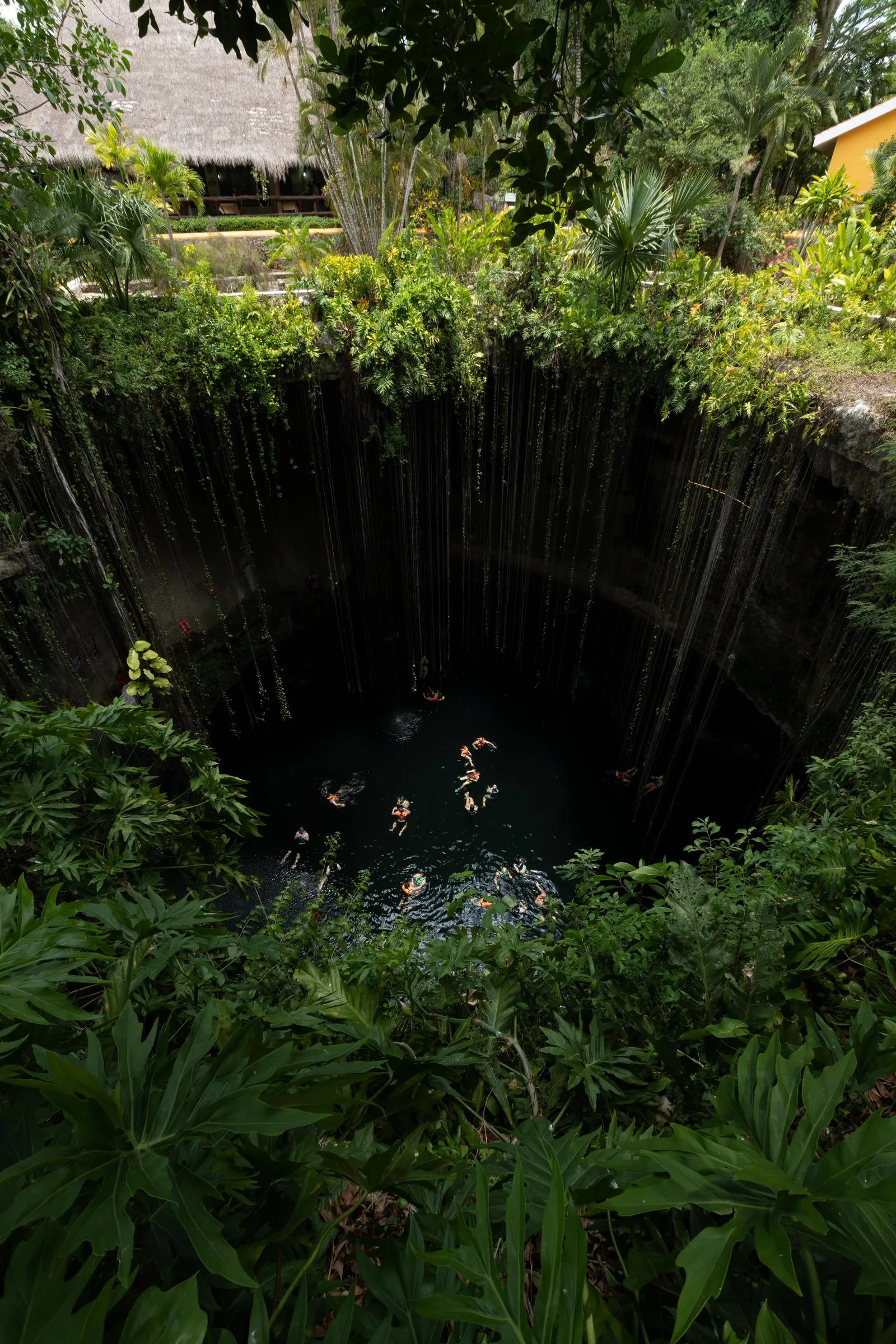
Swimming in Ik Kil
An open cenote with vines hanging down its sheer walls, close to Chichén Itzá.
- 03
The village cenotes of Homún
A small town with many cenotes run by local families, from open pools to caves reached by ladders.
- 04
Snorkelling a cave system
Around Tulum, cenotes like Dos Ojos connect to vast flooded caves — snorkel the entrances or dive with certified cave guides.
- 05
Sacred water of the Maya
For the ancient Maya, cenotes were sources of water and gateways to the underworld. The Sacred Cenote at Chichén Itzá received offerings for centuries.
The honest catch
Most visitors to the Yucatán stay on the Cancún–Tulum coast and see one crowded cenote on a day tour. But the peninsula has thousands of them — many inland, near small Maya villages, visited mostly by local families. Reaching them means renting a car or taking the time to travel inland, which is exactly what keeps them quiet.
How the trip fits together
- 2 days
Mérida
Colonial city base; day trip to the village cenotes of Homún.
- 2 days
Valladolid
Suytun, Ik Kil, Oxman and an early visit to Chichén Itzá.
- 1–2 days
Tulum area
Cave cenotes like Dos Ojos and Gran Cenote, then the coast.
Put it on your list if…
- Swimming in extraordinary natural pools sounds like the perfect travel day.
- You'd like to combine nature with Maya history and colonial towns.
- You're happy to rent a car or use the Tren Maya to get inland.
Maybe skip it if…
- You don't enjoy swimming or deep water (many cenotes require life jackets).
- You only want beach resorts and don't plan to leave the coast.
- Enclosed caves make you uncomfortable.
- Most cenotes require a shower before swimming and ban sunscreen and insect repellent, to protect the water. Follow each site's rules.
- Cave diving in cenotes requires certified cave-diving guides — never enter flooded caves on your own.
- Check your government's official travel advice for Mexico, which differs by state, before booking.
- Opening hours and fees change; many cenotes close by late afternoon.