Nº 18
The Great Wall of China
Beijing, China 40.43° N · 116.56° E
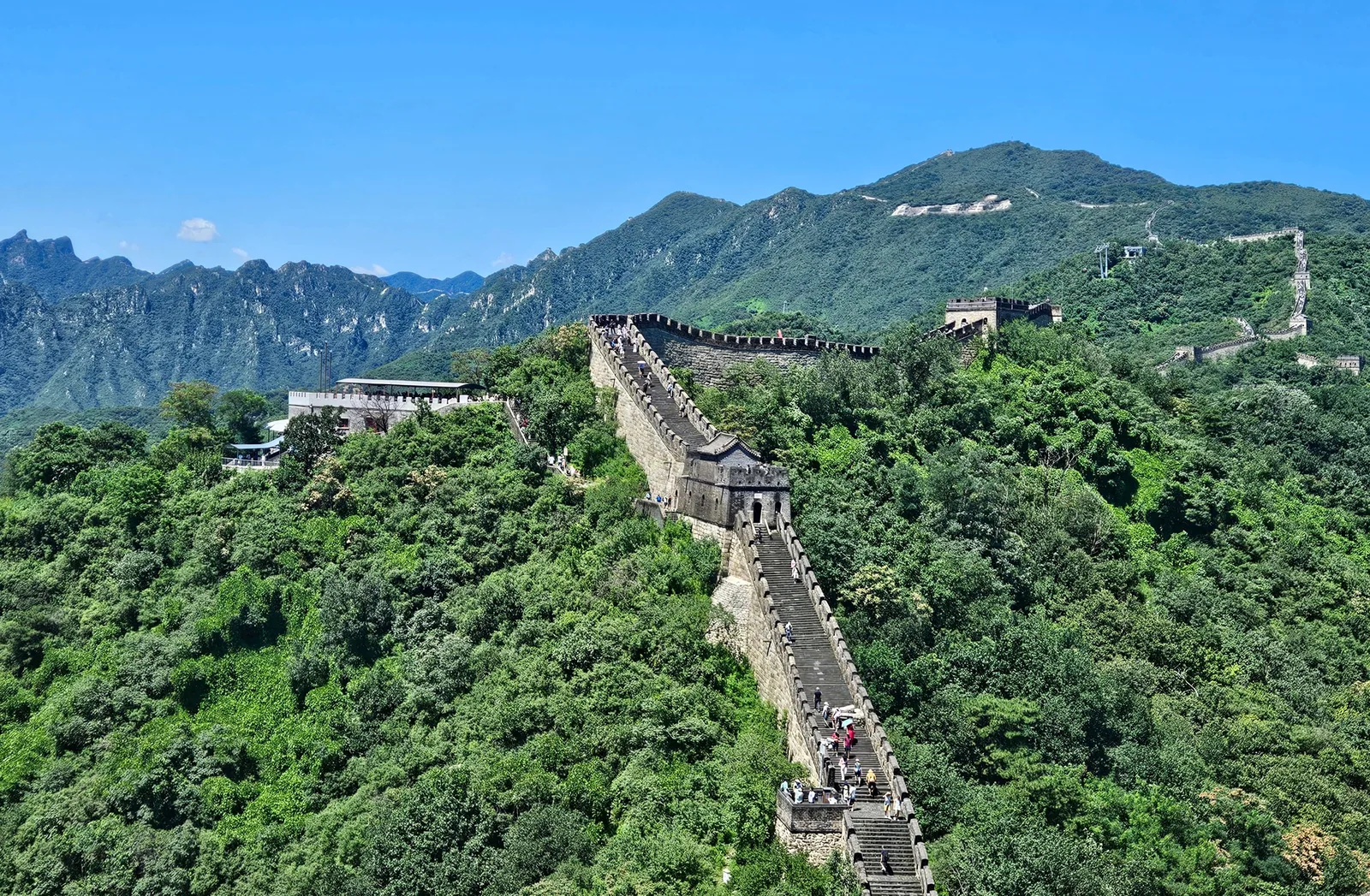
Stone walls and watchtowers snaking over forested mountain ridges north of Beijing — part of the longest structure ever built.
“Climbing the last steep steps to a watchtower at Mutianyu and seeing the wall roll away over ridge after ridge, with no one else on the section ahead.”
From a watchtower on a mountain ridge, the wall seems endless. It drops into valleys, climbs impossibly steep slopes and disappears over the horizon, section after section, tower after tower. The Great Wall of China isn’t a single wall but a vast network built and rebuilt over many centuries — together, the longest structure humans have ever made.
It belongs on the list because standing on it makes history feel physical. Each stone was carried up these mountains by hand. Soldiers once watched for invaders from the same towers where you stop to catch your breath. Around you, the hills turn pink with blossom in spring and gold and red in autumn.
And the right section changes everything. Skip the busiest stretch, arrive early at Mutianyu or hike the ridgelines of Jinshanling, and you’ll find moments of real quiet on one of the world’s most famous monuments. Then ride a toboggan back down — because even wonders can be fun.
From someday to a real plan
- Days needed
- 1 day (3–5 for Beijing)
- Best months
- Apr – May · Sep – Oct
- Budget
- US$80–200 per person per day
- Getting there
- Straightforward
- Crowds
- Busy
A full day covers one well-chosen section from Beijing. Add a second wall day for a hike on a less-restored stretch, and 2–3 days for the city itself.
Mild temperatures, clearer skies and spring blossom or autumn colour. Avoid China's national holidays in early May and early October.
Beijing hotels span every range. At Mutianyu, entry was around ¥40–45 in 2026, with the cable car about ¥140 return and the toboggan extra. A private driver for the day adds a moderate amount. Orientation ranges — verify before booking.
Mutianyu is about 1.5–2 hours by car from central Beijing; Badaling is reachable by train; Jinshanling is around 2.5–3 hours away.
Badaling is extremely crowded. Mutianyu is busy but manageable if you arrive at opening time and walk away from the cable car.
The year at a glance
- Jan
- Feb
- Mar
- Apr
- May
- Jun
- Jul
- Aug
- Sep
- Oct
- Nov
- Dec
Winter is cold but can be beautifully quiet, sometimes with snow. July–August is hot and humid, with rain and haze. The first week of October (Golden Week) and the early-May holiday bring enormous crowds.
What you'll remember
- 01
Mutianyu
A restored section with many watchtowers, forested hills and a cable car — the best balance of beauty and access.
- 02
The toboggan down
At Mutianyu you can ride a metal toboggan track back down the mountain.
- 03
Jinshanling at sunrise
A partly restored stretch with dramatic ridgelines, popular with photographers and hikers.
- 04
A watchtower to yourself
Walk 20–30 minutes beyond the busiest towers and the crowds thin dramatically.
- 05
Beijing's imperial sights
Combine the wall with the Forbidden City, the Temple of Heaven and the Summer Palace.
How the trip fits together
- 2–3 days
Beijing
Forbidden City, hutong alleys, Temple of Heaven and Peking duck.
- 1 day
Mutianyu
Early start, cable car up, walk the towers, toboggan down.
- +1 day
Jinshanling (optional)
A longer hike on a wilder-feeling section.
Put it on your list if…
- You want to walk on one of the most famous structures in human history.
- You're happy to climb steep steps for big views.
- You're planning a Beijing trip and have a spare day.
Maybe skip it if…
- You can only visit during national holidays.
- Steep, uneven steps are a problem for you — choose a section with cable car access and gentle stretches.
- You'd only see Badaling on a crowded weekend.
- Tickets are real-name: bring your passport and book through official or reputable channels.
- Hiking unrestored 'wild wall' sections is dangerous and officially off-limits in places — choose restored sections or licensed guides.
- Check China's current visa-free and transit rules for your passport on official Chinese government or embassy sources.
- Set up international payments on Alipay or WeChat Pay before you travel.