Nº 15
Torres del Paine
Patagonia, Chile 50.94° S · 73.41° W
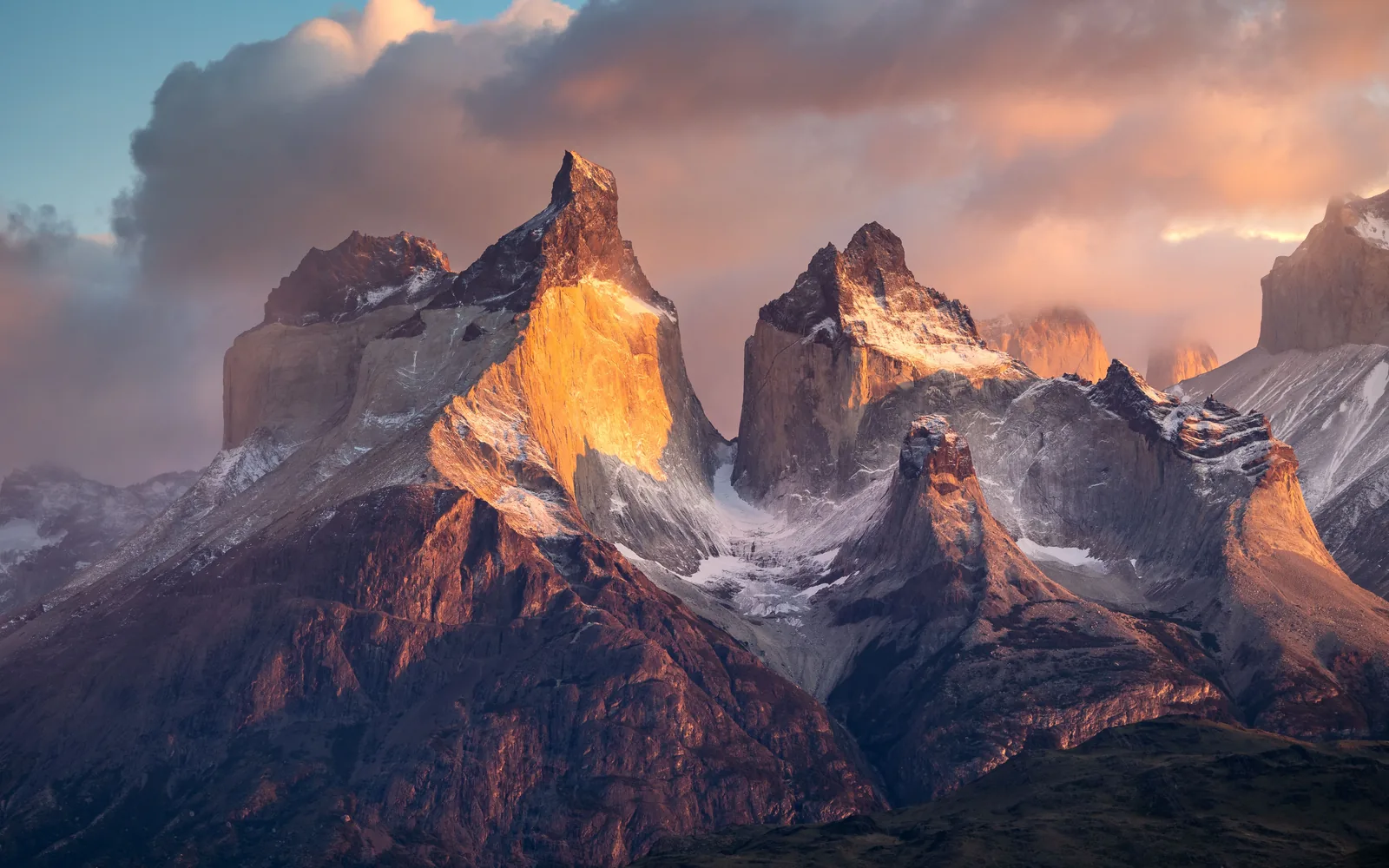
Three granite towers rising above glaciers, turquoise lakes and windswept steppe in Chilean Patagonia — one of the world's great trekking destinations.
“Scrambling up the final boulder field before dawn and watching the first sunlight turn the three granite towers orange above the glacial lake.”
At the southern end of South America, where the Andes break into jagged peaks above the Patagonian steppe, three granite towers rise almost vertically into the sky. They give Torres del Paine its name, and they’re only the beginning: around them lie glaciers, lakes of impossible turquoise, forests bent by wind and valleys where condors circle overhead.
It belongs on the list because it’s one of the most dramatic mountain landscapes on the planet — and you can walk right into it. On the W Trek, each day brings a different world: the towers at sunrise, the hanging glaciers of the French Valley, the vast blue wall of Grey Glacier. Guanacos watch you pass, and with luck a puma crosses the trail far ahead.
And Patagonia’s famous weather makes every moment feel earned. Wind can knock you sideways, rain can arrive from a blue sky, and then the clouds tear open to reveal a peak glowing gold. People come for the photos. They leave with the memory of feeling small, windswept and completely alive.
From someday to a real plan
- Days needed
- 5–7 days
- Best months
- Nov – Mar
- Budget
- US$150–350 per person per day
- Getting there
- Remote
- Crowds
- Busy
The classic W Trek takes 4–5 days on foot; the full O Circuit takes 7–9. Day visitors can see the highlights in 2–3 days from Puerto Natales.
The main trekking season, with long daylight. December–February is warmest and busiest; wind is strong in every month.
Refugios and campsites inside the park are expensive for what they are, and must be booked ahead. Park entry for foreign adults was CLP 32,400 for one day or CLP 48,500 for longer stays in 2026, bought online. Orientation ranges — verify before booking.
Fly to Punta Arenas (then about 3 hours by bus to Puerto Natales) or seasonally to Puerto Natales itself. The park entrances are around 2 hours further.
The W Trek is busy in peak season and camps fill up months in advance. Trails still feel wild outside the Base of the Towers rush.
The year at a glance
- Jan
- Feb
- Mar
- Apr
- May
- Jun
- Jul
- Aug
- Sep
- Oct
- Nov
- Dec
April brings autumn colours and fewer people, but shorter days. In winter (May–September) many services close and most multi-day trekking is only possible with guides. Winds above 100 km/h can happen at any time.
What you'll remember
- 01
Base of the Towers
A long, steep day hike to the lake beneath the three granite towers — at sunrise if you sleep nearby.
- 02
Grey Glacier
A huge wall of blue ice at the end of Lake Grey, seen from viewpoints, suspension bridges or boat trips.
- 03
The French Valley
The middle of the W, climbing between hanging glaciers and the jagged Cuernos del Paine.
- 04
Guanacos on the steppe
Wild relatives of the llama graze in large herds near the park's eastern entrances.
- 05
Tracking pumas
Patagonia's big cats are seen more often here than almost anywhere; specialist guided tours improve the odds.
- 06
The Cuernos at sunset
The 'horns' of Paine glowing above Lake Nordenskjöld, one of the park's classic views.
How the trip fits together
- 1–2 nights
Puerto Natales
Gateway town for gear, transport and last-minute supplies.
- 4–5 days
W Trek: east to west
Base of the Towers, the French Valley, Paine Grande and Grey Glacier, staying in refugios or campsites.
- Half day
Grey Glacier boat (optional)
Get close to the ice face at the end of the trek.
- +2–3 days
El Calafate (optional)
Cross into Argentina for Perito Moreno Glacier.
Put it on your list if…
- Multi-day hiking through spectacular mountains is your idea of a dream trip.
- You don't mind booking accommodation many months ahead.
- Wind, rain and sunshine in one afternoon sounds like an adventure.
Maybe skip it if…
- You want to book spontaneously in peak season.
- Walking 15–25 km a day with a pack isn't realistic for you (day tours are an option).
- Unpredictable weather would ruin your plans.
- Buy park entry online through the official CONAF channels, and reserve every refugio or campsite on your route before arriving — rangers check.
- Camping and fires are only allowed in designated areas; the park has suffered serious human-caused wildfires.
- Check Chile's entry requirements for your passport on official government sources.
- Pack for all four seasons: windproof, waterproof layers are essential even in summer.