Nº 03
Galápagos Islands
Ecuador 0.75° S · 90.32° W
Volcanic islands about 1,000 km off the coast of Ecuador, where giant tortoises, sea lions and blue-footed boobies barely look up when you walk past.
“Snorkelling off a black lava shore when a young sea lion swims straight at you, spins twice around your mask, and swims away again.”
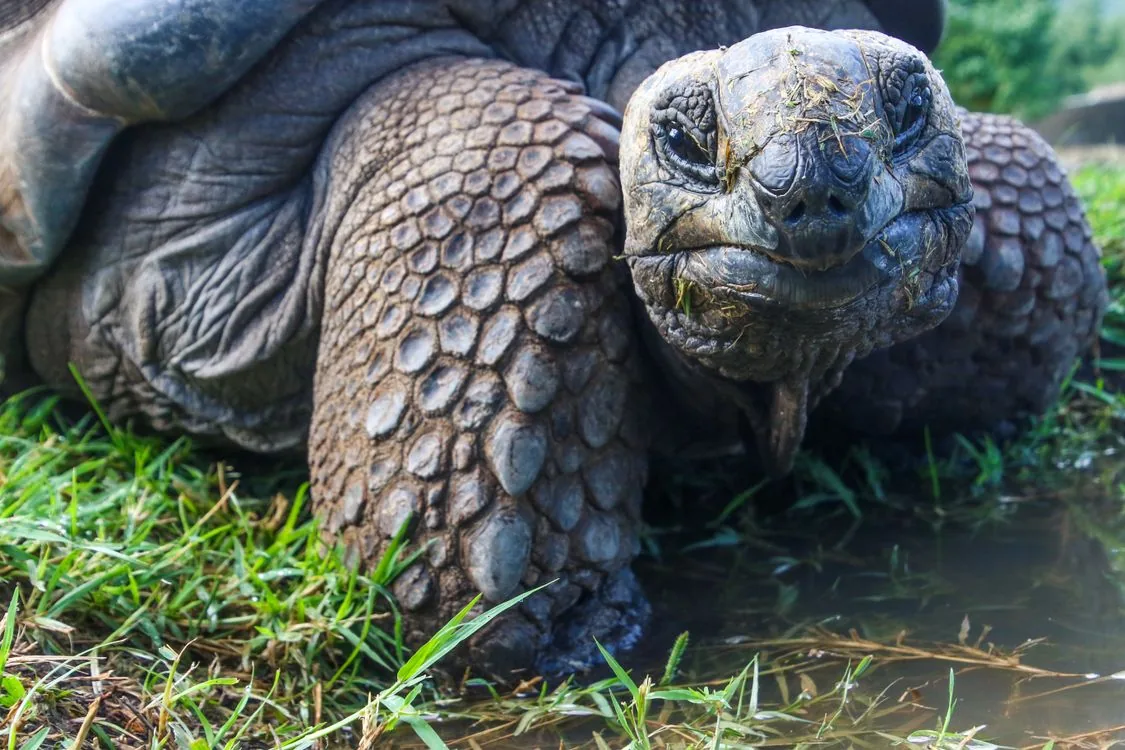
Most wildlife trips are about waiting, hiding and hoping. The Galápagos turns that upside down. Here the animals evolved with so few predators — and so little reason to fear people — that they simply carry on with their lives while you stand a few steps away. A sea lion naps on the bench you wanted to sit on. A booby shows off its blue feet at the edge of the trail. A giant tortoise, older than anyone you know, crosses the path in its own time.
It belongs on the list because it’s one of the few places on Earth that still feels like it did when naturalists first described it. The islands inspired Charles Darwin’s thinking about how species change, and walking across black lava next to marine iguanas, you understand why: everything here looks like an experiment.
And it’s as much underwater as on land. Put on a mask and the show continues — turtles gliding over the rocks, rays in the sand, playful sea lions checking you out. It’s not a cheap trip, and it’s not meant to be. That’s exactly what keeps it this extraordinary.
From someday to a real plan
- Days needed
- 7–10 days
- Best months
- Apr – May · Nov
- Budget
- US$200–400+ per person per day
- Getting there
- Moderate
- Crowds
- Moderate
5 days is the realistic minimum once you count flights from the mainland. A week lets you visit 2–3 islands or take a proper small-ship cruise.
A year-round destination. These shoulder months usually combine calmer seas, good visibility and fewer holiday crowds.
Land-based island hopping is the lower range; small-ship cruises commonly run US$500–1,000+ per day. On top, foreign adults paid a US$200 national park fee plus a US$20 Transit Control Card in 2026. Orientation ranges — verify before booking.
Fly to Quito or Guayaquil, then about 2 hours to Baltra (for Santa Cruz) or San Cristóbal. Inter-island speedboats can take 2+ hours on rough water.
Visitor sites are regulated and many require a certified naturalist guide, so it never feels like a free-for-all — but popular day-trip sites fill up with boats.
The year at a glance
- Jan
- Feb
- Mar
- Apr
- May
- Jun
- Jul
- Aug
- Sep
- Oct
- Nov
- Dec
Two seasons, both worth it. Dec–May is warmer and greener, with calmer seas and warmer water. Jun–Nov is cooler and drier, with rougher seas but colder, nutrient-rich water that brings more marine life. There's no bad month — only a different trip.
What you'll remember
- 01
Giant tortoises in the wild
In the Santa Cruz highlands, huge tortoises graze in pastures and forest. They move slowly, and so will you.
- 02
Sea lions everywhere
On San Cristóbal they sleep on benches, beaches and boat ramps. Keep your distance — the rules ask for it, even when they don't.
- 03
The blue-footed booby dance
Males lift their bright blue feet one at a time to impress a female. North Seymour and Española are classic places to see it.
- 04
Kicker Rock
A split volcanic rock off San Cristóbal where snorkellers and divers look for turtles, rays and sometimes sharks in the channel.
- 05
Pinnacle Rock from Bartolomé
A short boardwalk climb to one of the most famous views in the islands: lava fields, two curved bays and a spire of rock.
- 06
Marine iguanas
The only lizards in the world that forage in the sea, piled on warm lava rocks and sneezing out salt.
How the trip fits together
- 1 night
Quito or Guayaquil
A buffer night on the mainland protects you from missing the morning island flight.
- 3 days
Santa Cruz
The best-connected base: highlands tortoises, beaches and day trips to nearby islands.
- 2 days
Isabela
The largest island, quieter, with lava tunnels, flamingo lagoons and volcano hikes.
- 2 days
San Cristóbal
Sea lions in town, Kicker Rock and an airport to fly back from.
Put it on your list if…
- Wildlife close-ups matter more to you than luxury or nightlife.
- You like snorkelling, or would like a reason to start.
- You're willing to pay for a place that deliberately limits how it's visited.
Maybe skip it if…
- You get badly seasick and would rely on inter-island boats — choose a single base or a larger ship instead.
- You want a cheap beach holiday: fees, flights and boats make it expensive.
- You dislike strict rules: marked trails, guide requirements and biosecurity checks are part of the deal.
- The national park fee is paid on arrival in the islands and the Transit Control Card at the mainland airport. Check current amounts and payment methods before you travel.
- Luggage is inspected for biosecurity: no fresh food, seeds, plants or soil. Declare anything you're unsure about.
- Check Ecuador's entry requirements for your passport on official government sources.
- Book cruises with licensed operators and read the itinerary closely — each boat has a fixed, park-approved route.