Nº 05
Machu Picchu
Cusco Region, Peru 13.16° S · 72.55° W
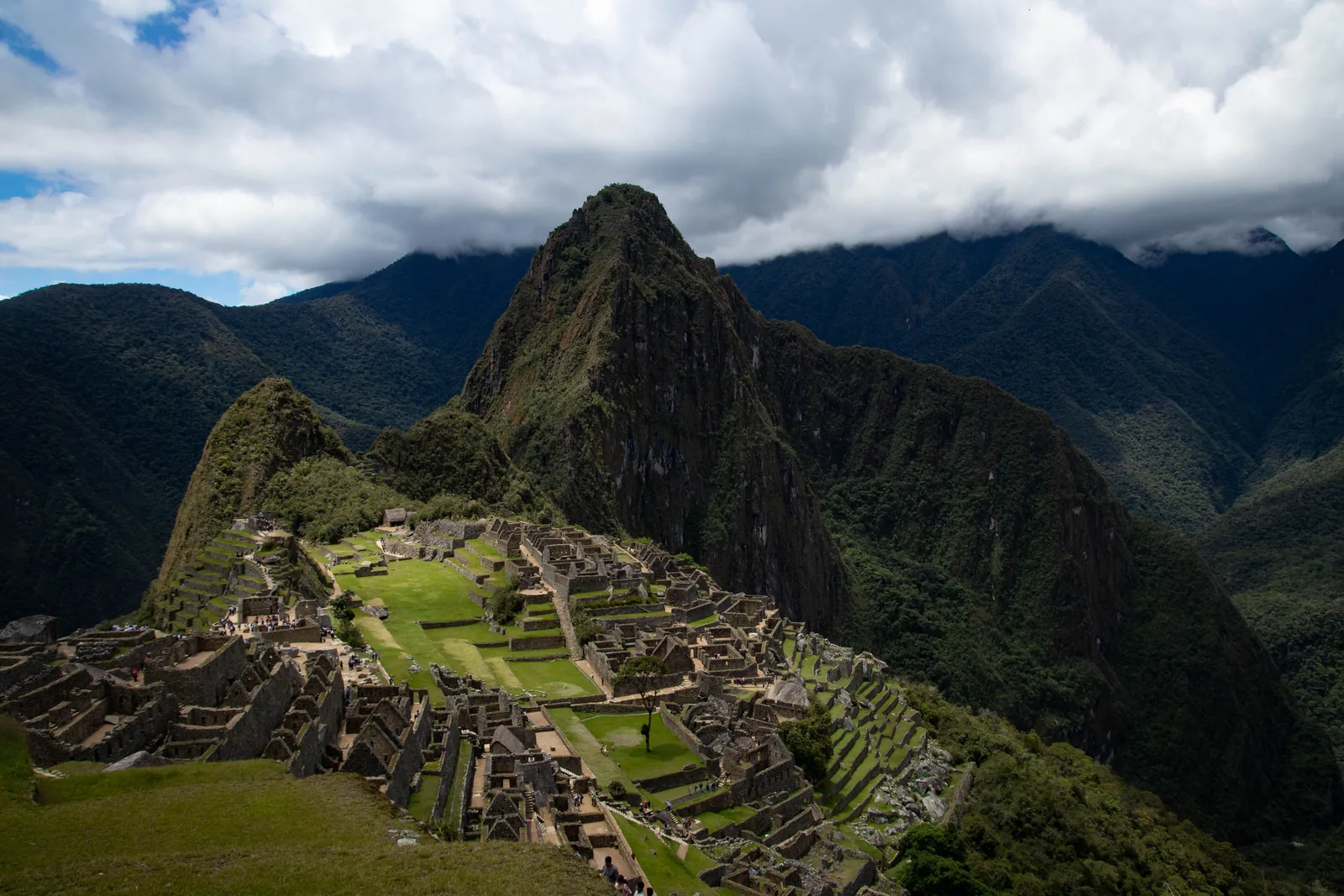
A 15th-century Inca citadel built along a mountain ridge above the Urubamba River, wrapped in cloud forest and steep green peaks.
“The morning cloud lifting off the ridge, and the stone terraces appearing one level at a time below Huayna Picchu.”
It’s hard to overstate how unlikely Machu Picchu looks. Stone temples, houses and terraces sit on a narrow ridge high above a river gorge, surrounded on every side by steep, green, cloud-covered mountains. It was built by the Inca in the 15th century, abandoned within about a hundred years, and stayed largely unknown to the outside world until the early 20th century.
It belongs on the list because the setting is as extraordinary as the ruins. Clouds move through the valley and hide the citadel, then drift away to reveal it again. Llamas graze on the terraces. The stonework fits together so precisely that you find yourself running a hand along the walls just to believe it.
And the journey is part of the magic: the train along the Urubamba, the villages of the Sacred Valley, the old streets of Cusco built on Inca foundations. Or, for those who earn it on foot, the moment after four days on the Inca Trail when the Sun Gate opens onto the view.
From someday to a real plan
- Days needed
- 4–6 days
- Best months
- Apr – May · Sep – Oct
- Budget
- US$120–350 per person per day
- Getting there
- Moderate
- Crowds
- Very busy
Include Cusco and the Sacred Valley to acclimatize. Machu Picchu itself is a half day to one day; the 4-day Inca Trail adds its own time.
Shoulder months: mostly dry weather with fewer visitors than the Jun–Aug peak.
Hostels to boutique hotels in Cusco. The citadel ticket was S/152 for foreign adults in 2026, and the train plus bus up from Aguas Calientes add a significant amount. Orientation ranges — verify before booking.
Fly to Cusco via Lima, travel to Ollantaytambo, take the train to Aguas Calientes, then a bus of about 30 minutes up to the site — or hike in on the Inca Trail.
Entry is by timed circuits with daily caps (roughly 4,500–5,600 visitors depending on the season), but it's still one of the busiest sites in South America.
The year at a glance
- Jan
- Feb
- Mar
- Apr
- May
- Jun
- Jul
- Aug
- Sep
- Oct
- Nov
- Dec
The dry season (May–Sep) has the most reliable views and the biggest crowds. Rainy season peaks around Jan–Feb; the classic Inca Trail closes every February for maintenance. Clouds can hide the view on any morning, so give yourself a second chance if you can.
What you'll remember
- 01
The postcard view
From the upper terraces near the Guardhouse, the whole citadel lies below you with Huayna Picchu behind. Check which circuit includes it when you buy tickets.
- 02
Arriving through the Sun Gate
Inca Trail hikers first see Machu Picchu from Inti Punku after four days on foot. Permits are limited and sell out months ahead.
- 03
Climbing Huayna Picchu
The steep peak behind the citadel, with narrow stone stairs and a separate, limited ticket.
- 04
The Sacred Valley
Ollantaytambo's fortress, the circular terraces of Moray and the salt pans of Maras — worth days on their own.
- 05
The train along the Urubamba
The ride from Ollantaytambo follows the river as the landscape turns from dry valley to cloud forest.
- 06
Cusco's old streets
The former Inca capital, with Spanish colonial buildings standing on Inca stone walls, and Sacsayhuamán above the city.
How the trip fits together
- 2 days
Sacred Valley
Lower than Cusco, so a gentler place to adjust to altitude before anything strenuous.
- 1 night
Aguas Calientes
Sleep at the foot of the mountain to catch an early entry slot.
- Half to 1 day
Machu Picchu
Your ticket fixes the circuit and entry time — choose them before you choose trains.
- 2 days
Cusco
Museums, markets and Inca sites around the city at the end of the trip.
Put it on your list if…
- You want to see one of the world's great archaeological sites in a dramatic natural setting.
- You're happy to book tickets, trains and circuits well in advance.
- You'd enjoy combining history with Andean hiking and food.
Maybe skip it if…
- You dislike crowds and fixed time slots — there's no quiet, spontaneous version of this visit.
- A doctor has advised against high altitude (Cusco sits around 3,400 m).
- You can only go in Jan–Feb and want guaranteed clear views.
- Buy entry tickets only on the official Peruvian Ministry of Culture platform or through authorized sellers. Tickets are tied to your passport, circuit and entry time.
- Inca Trail permits are sold only through licensed operators, in limited numbers.
- Talk to a doctor about altitude before travelling, especially with heart or lung conditions.
- Check current site rules on bag size, walking sticks, drones and re-entry before you go.