✦ 16
Vatnajökull Ice Caves
Southeast Iceland 64.05° N · 16.18° W
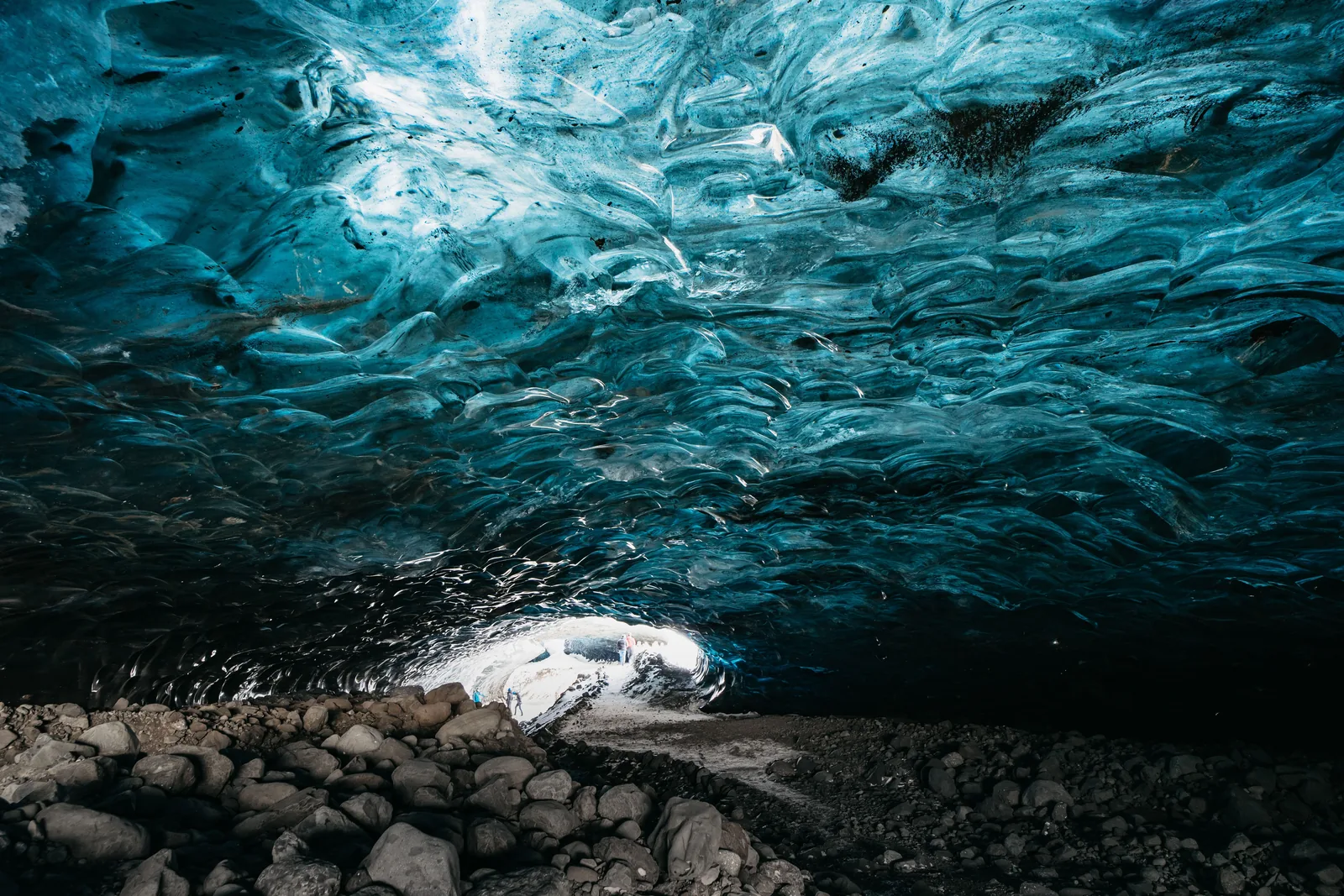
Natural tunnels of glowing blue ice beneath Europe's largest glacier by volume, formed by meltwater and open only in the depths of the Icelandic winter.
“Stepping out of the grey winter light into a tunnel where the ice above you glows electric blue, with ancient air bubbles frozen in the ceiling.”
Under the vast ice cap of Vatnajökull in southeast Iceland, summer meltwater carves tunnels through the glacier. When winter returns and the water freezes still, some of these tunnels become safe enough to enter — and inside, the world turns blue. The ice above and around you glows in shades from pale turquoise to deep sapphire, polished smooth and filled with bubbles of air trapped for centuries.
It belongs on the list because it’s a wonder with an expiry date. The caves are different every year, shaped by that summer’s meltwater, and by spring many will have collapsed or melted away. Standing inside one feels like being let in on a secret the glacier will soon take back.
And the landscape around it is pure winter drama: icebergs drifting across Jökulsárlón lagoon, ice crystals scattered on a black-sand beach, snow-covered mountains glowing pink in the short daylight. At night, if the sky clears, the northern lights may dance above the glacier. Iceland in summer is beautiful. Iceland in winter is otherworldly.
From someday to a real plan
- Days needed
- 2–3 nights on the South Coast
- Best months
- Dec – Feb
- Budget
- US$200–400 per person per day
- Getting there
- Moderate
- Crowds
- Moderate
The cave tour itself is 2.5–4 hours. Allow two nights near Jökulsárlón or Skaftafell for weather flexibility; most people fit it into a 5–7 day winter Iceland trip.
Natural ice caves generally open from about November to March, when cold temperatures make them stable. Mid-winter is the most reliable.
Iceland is expensive. Guided ice cave tours cost roughly US$160–170 per person at last check, and winter car rental and South Coast accommodation add up. Orientation ranges — verify before booking.
About 5 hours' drive (roughly 380 km) from Reykjavík along the Ring Road in winter conditions, or join a multi-day tour. Tours meet near Jökulsárlón or Skaftafell.
Popular caves see several groups a day. Smaller operators and early departures feel much more peaceful.
The year at a glance
- Jan
- Feb
- Mar
- Apr
- May
- Jun
- Jul
- Aug
- Sep
- Oct
- Nov
- Dec
From roughly April to October there are no natural ice caves: meltwater makes them unstable. Year-round alternatives include tours to other glacier caves, such as Katla near Vík. Winter weather can close roads and cancel tours at short notice.
What you'll remember
- 01
Crystal-blue ice
Compressed glacier ice absorbs red light, so the cave walls glow in shades of blue that change with daylight.
- 02
A cave that won't exist next year
The caves form and collapse every year, so each season's cave is unique.
- 03
Jökulsárlón Glacier Lagoon
Icebergs drifting across a lagoon toward the sea, often with seals.
- 04
Diamond Beach
Chunks of glacier ice washed up on black sand, glittering in low winter light.
- 05
Northern lights over the glacier
Long, dark winter nights on the South Coast bring real chances of auroras — one of the Icons on this list.
The honest catch
Most visitors to Iceland come in summer, when these caves simply don't exist. Seeing them means a winter road trip on icy roads, short daylight hours and flexible plans around storms. And they can only be entered with specialist guides. Those who make it get something truly ephemeral.
How the trip fits together
- 1 night
Reykjavík
Arrival, then head east on the Ring Road.
- 1 night
South Coast (Vík)
Seljalandsfoss, Skógafoss and Reynisfjara black beach on the way.
- 2 nights
Skaftafell / Jökulsárlón
Ice cave tour, glacier lagoon and Diamond Beach.
- 1 day
Back to Reykjavík
A long winter drive — leave early and check conditions.
Put it on your list if…
- You want to see something that exists only for a few months each year.
- Winter landscapes, darkness and auroras sound magical, not gloomy.
- You're comfortable with flexible plans in unpredictable weather.
Maybe skip it if…
- You can only travel to Iceland in summer.
- Driving on icy, windy roads isn't something you're comfortable with (join a tour instead).
- Your budget is tight.
- Only enter ice caves with certified glacier guides — never on your own. Caves can collapse or flood.
- Check road conditions (road.is) and weather alerts (safetravel.is) every day in winter.
- Book tours with flexible cancellation; operators cancel when conditions are unsafe.
- Check entry requirements for Iceland (Schengen area) for your passport on official sources.