Nº 11
The Great Barrier Reef
Queensland, Australia 16.92° S · 146.30° E
The world's largest coral reef system, stretching for more than 2,300 km along Australia's northeast coast — thousands of reefs, islands and cays.
“Floating face-down over the edge of an outer reef as a green turtle glides past below, with nothing but blue water and coral in every direction.”
From space, it appears as a pale blue ribbon along Australia’s northeast coast. Underwater, it’s an entire universe. The Great Barrier Reef is the largest coral reef system in the world — thousands of individual reefs and hundreds of islands stretching for more than 2,300 kilometres, home to turtles, rays, sharks, whales and an almost unbelievable variety of fish and coral.
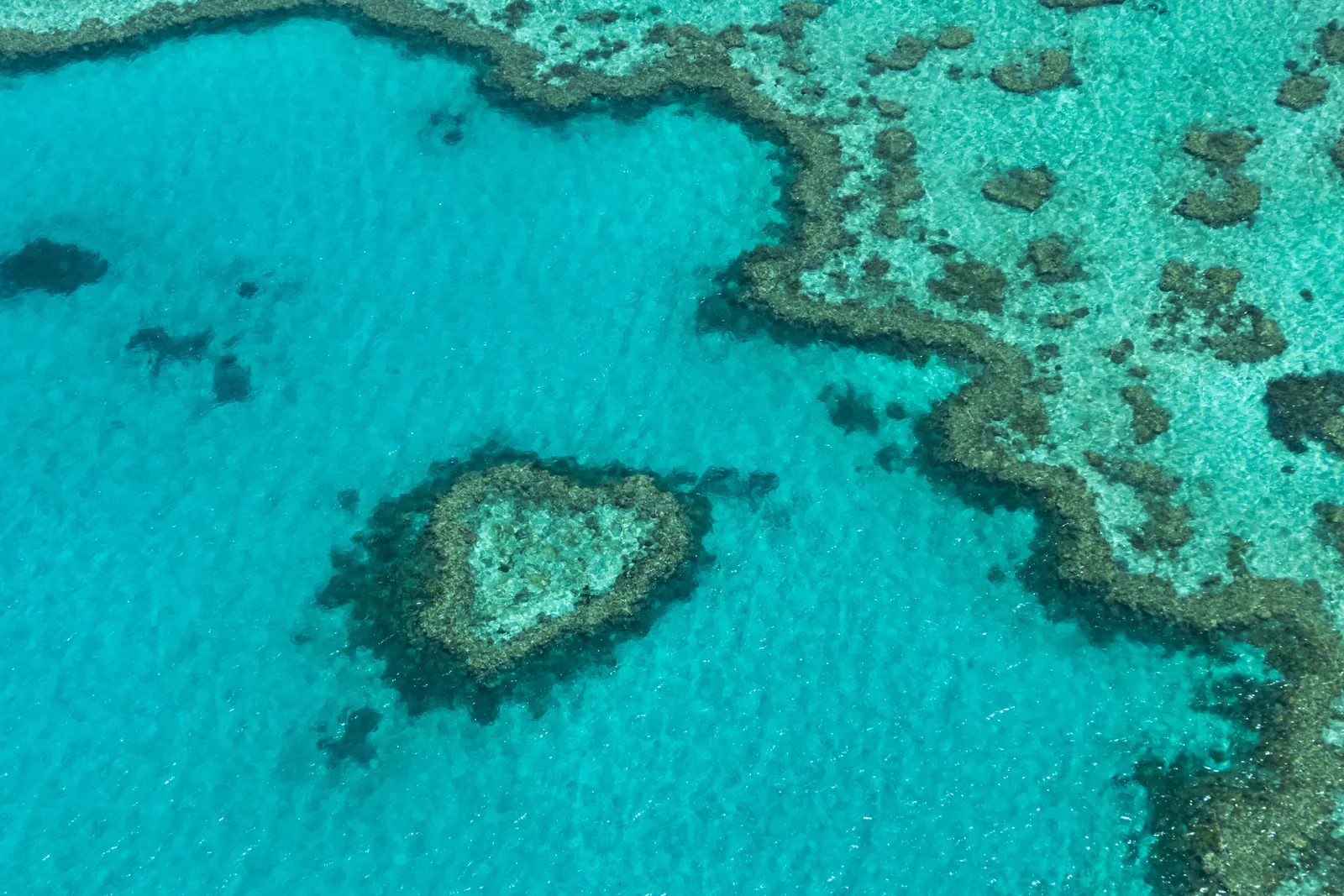
It belongs on the list because nothing prepares you for the first moment you put your face in the water. Suddenly there are coral gardens in shades you didn’t know existed, parrotfish crunching on the reef, a turtle drifting past as if you were part of the scenery. From above, on a scenic flight, the reefs look like brushstrokes on a turquoise canvas, and the famous Heart Reef makes its appearance.
And it’s a place that asks you to care. The reef has been through repeated bleaching events, and choosing responsible operators matters. Visit with respect, and you’ll leave with something more than photos: a real sense of why this living wonder is worth protecting.
From someday to a real plan
- Days needed
- 5–7 days
- Best months
- Jun – Oct
- Budget
- US$180–400 per person per day
- Getting there
- Straightforward
- Crowds
- Moderate
Two reef days from Cairns or Port Douglas plus the rainforest, or 2–3 days in the Whitsundays. A liveaboard or island stay adds depth.
Drier weather, calmer seas and good visibility, outside the main marine stinger season. Water is cooler but still comfortable with a wetsuit.
Australia is expensive. Outer-reef day trips commonly cost roughly AUD 250–350 per person, and scenic flights or liveaboards far more. Commercial reef trips include the Environmental Management Charge (around AUD 8 per person per full day in 2026). Orientation ranges — verify before booking.
Fly into Cairns (CNS), Proserpine/Whitsunday Coast or Hamilton Island. Reef boats leave daily from Cairns, Port Douglas and Airlie Beach.
Popular pontoons and day-trip sites can be busy, but the reef is so large that smaller operators and further reefs feel quiet.
The year at a glance
- Jan
- Feb
- Mar
- Apr
- May
- Jun
- Jul
- Aug
- Sep
- Oct
- Nov
- Dec
The tropical wet season (roughly Dec–Mar) brings heat, heavy rain and cyclone risk, and marine stinger season (around Nov–May) means wearing a full-body stinger suit. Humpback whales pass through in winter (roughly Jun–Sep).
What you'll remember
- 01
The outer reef
Snorkel or dive where coral walls drop into deep water — the clearest conditions are usually far from the coast.
- 02
Heart Reef from the air
A naturally heart-shaped reef in the Whitsundays, seen only on scenic flights — landing and snorkelling there aren't allowed.
- 03
Whitehaven Beach
Brilliant white silica sand and the swirling colours of Hill Inlet on Whitsunday Island.
- 04
Turtles and giant clams
Green and loggerhead turtles and huge clams are common sights on many snorkel sites.
- 05
Whales in winter
Humpbacks migrate along the coast in winter; dwarf minke encounters are possible on some northern reef trips around June–July.
- 06
The Daintree Rainforest
One of the oldest tropical rainforests on Earth, meeting the reef at Cape Tribulation.
How the trip fits together
- 2 days
Cairns
The main reef hub, with outer-reef day trips and diving courses.
- 2 days
Port Douglas & Daintree
Smaller boats to northern reefs, then the rainforest and Cape Tribulation.
- 2–3 days
Whitsundays (Airlie Beach)
Sailing, Whitehaven Beach and the Heart Reef scenic flight.
Put it on your list if…
- Snorkelling or diving on a world-class reef is a lifelong dream.
- You're happy to spend on good operators who follow reef-protection rules.
- You'd like to combine reef, rainforest and islands in one trip.
Maybe skip it if…
- You don't enjoy being on boats or in open water.
- Your budget is tight — reef trips in Australia are costly.
- You can only travel in Jan–Mar and want calm, clear conditions.
- Choose operators accredited for high standards of environmental practice by the Great Barrier Reef Marine Park Authority.
- Wear a stinger suit in stinger season and follow operators' safety advice in the water.
- Check Australia's visa or electronic travel authority requirements for your passport on official government sources.
- The reef has suffered repeated mass coral bleaching in recent years. Ask operators about current conditions and where they visit.