✦ 07
Fernando de Noronha
Pernambuco, Brazil 3.85° S · 32.42° W
A protected volcanic archipelago in the Atlantic, hundreds of kilometres off Brazil's northeast coast, with some of the most beautiful beaches and clearest water in the country.
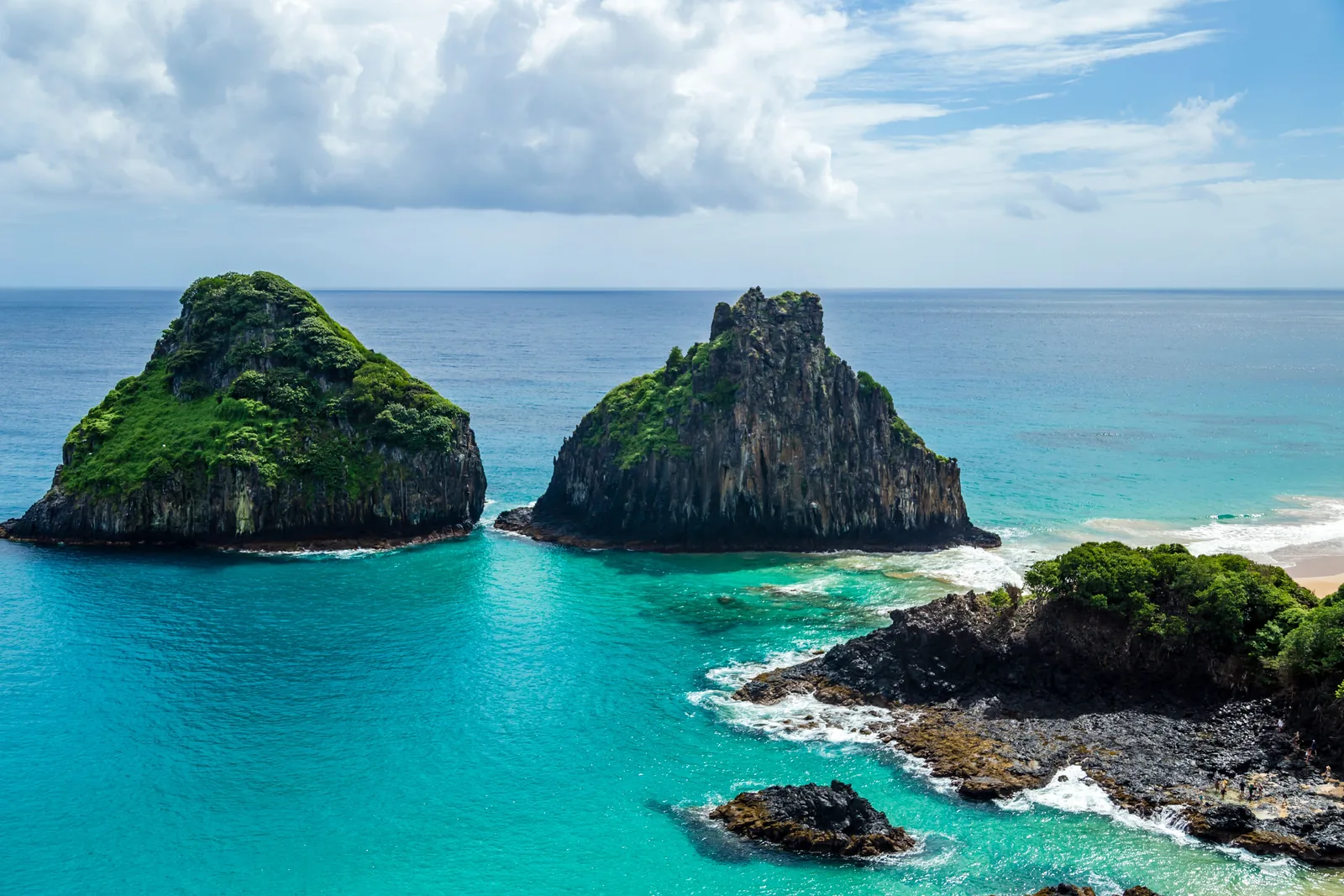
“Standing on the cliff above Baía dos Porcos at sunset, the twin peaks of Dois Irmãos rising out of water so clear you can see the rocks beneath it.”
Far out in the Atlantic, beyond the last stretch of Brazil’s northeast coast, a small group of volcanic islands rises from deep blue water. Fernando de Noronha has cliffs covered in green, beaches of golden sand, and water so clear that from the viewpoints you can see turtles swimming below. Most of the archipelago is a protected national marine park, and it shows everywhere you look.
It belongs on the list because it’s what a tropical island paradise looks like when someone decides to protect it before it’s too late. There are no high-rise resorts, visitor numbers are controlled, and nature comes first. In the morning, spinner dolphins gather in the bay. In the afternoon, turtles graze in the shallows while you snorkel beside them.
And it saves its best moments for the edges of the day: climbing down through a crack in the cliff to reach Baía do Sancho, or watching the sunset paint the twin peaks of Dois Irmãos gold. It isn’t cheap and it isn’t easy — and that’s precisely why it still feels like this.
From someday to a real plan
- Days needed
- 5–7 days
- Best months
- Aug – Dec
- Budget
- US$200–500 per person per day
- Getting there
- Moderate
- Crowds
- Light
4 full days on the island covers the main beaches, a boat trip and a couple of trails. Longer stays get more expensive quickly because the environmental fee rises with each day.
Generally the drier season, with calm seas on the inner coast and very clear water for snorkelling.
Pousadas and restaurants are expensive, and there are two mandatory costs: the Environmental Preservation Fee (TPA), R$105.79 per day in 2026 and rising progressively with longer stays, plus a separate national marine park ticket valid for 10 days. Orientation ranges — verify before booking.
Domestic flights from Recife or Natal (roughly 1–1.5 hours). On the island, people get around by buggy rental, taxi or the single-road bus.
Visitor numbers are deliberately controlled and some trails and pools use daily limits, so beaches rarely feel packed.
The year at a glance
- Jan
- Feb
- Mar
- Apr
- May
- Jun
- Jul
- Aug
- Sep
- Oct
- Nov
- Dec
The rainiest period is roughly March–July, though showers are usually short and the sea stays warm. From about December to March, northern swells can bring big waves to some beaches — great for surfers, less so for snorkelling there.
What you'll remember
- 01
Baía do Sancho
Reached by steps and ladders set into a crack in the cliff, and regularly voted one of the best beaches in the world.
- 02
Dois Irmãos from Baía dos Porcos
The archipelago's signature view: two rock peaks in the sea, framed by cliffs and tide pools.
- 03
Spinner dolphins at dawn
From the Mirante dos Golfinhos viewpoint, you can often watch spinner dolphins gather in the bay in the early morning.
- 04
Snorkelling with turtles at Sueste
A sheltered bay where sea turtles often feed in shallow water. Follow the guides' distance rules.
- 05
Atalaia's natural pool
A reef-sheltered tide pool with fish and small sharks, visited in small guided groups with strict rules (no sunscreen).
- 06
Sunset at Forte do Boldró
The island's classic sunset spot, looking over the sea toward Dois Irmãos.
The honest catch
Noronha limits itself on purpose. It charges a daily environmental fee that climbs with each extra day, controls visitor numbers, and has only small pousadas and expensive flights from the mainland. Most visitors are Brazilian, and it rarely appears on international itineraries — so despite its reputation at home, it remains a genuine secret abroad.
How the trip fits together
- 1 day
Recife & Olinda
Mainland gateway; Olinda's colourful colonial centre is a UNESCO World Heritage Site.
- 3 days
Noronha — inner sea
Sancho, Porcos and the dolphin viewpoint on the calmer side of the island.
- 2 days
Noronha — outer sea
Sueste turtles, the Atalaia pool and trails on the Atlantic side.
- Half day
Boat trip
Along the coast to see the cliffs and, often, spinner dolphins from the water.
Put it on your list if…
- You want world-class beaches and snorkelling without mass tourism.
- You're willing to pay more for a place that protects its nature seriously.
- Turtles, dolphins and clear water are your idea of luxury.
Maybe skip it if…
- You're looking for nightlife, big resorts or a budget beach trip.
- Following rules about limited access, reservations and group sizes would frustrate you.
- You'd only want to stay for 1–2 days — flights make short stays hard to justify.
- The TPA environmental fee is paid in advance through the official Fernando de Noronha channels; the marine park ticket is separate. Check current amounts before you travel.
- Some trails, the Atalaia pool and dive trips require advance booking with limited daily places — reserve early.
- Check Brazil's entry and visa requirements for your passport on official government sources.
- Respect wildlife rules: no touching or feeding animals, and sunscreen is restricted at some pools.