Nº 01
Serengeti Safari & Zanzibar
Tanzania 2.33° S · 34.83° E
The endless plains of the Serengeti, then the white sand and old stone streets of Zanzibar — East Africa's classic pairing, planned as one trip.
“Engine off, windows down, and a line of wildebeest walking past the vehicle all the way to the horizon.”
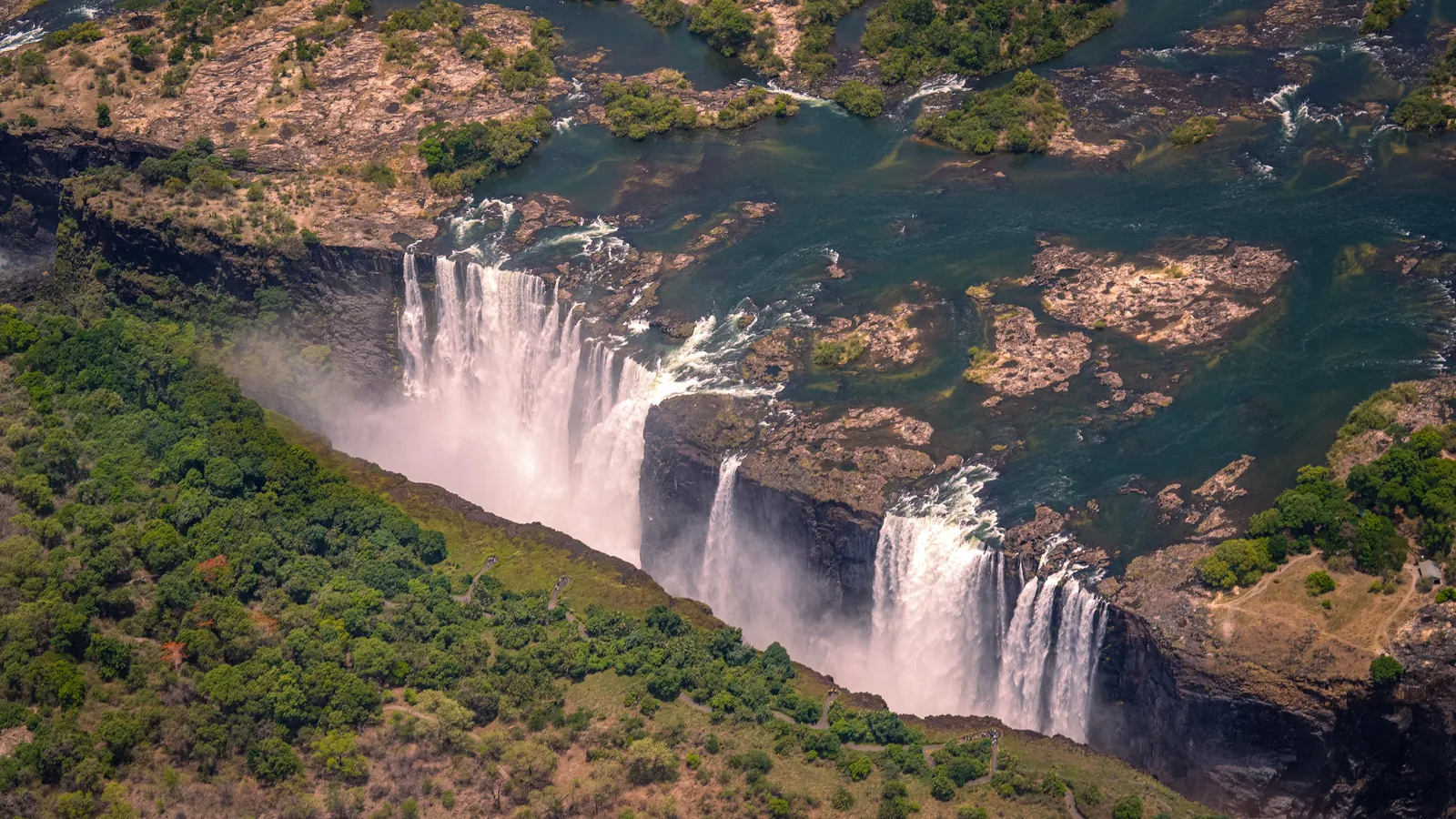
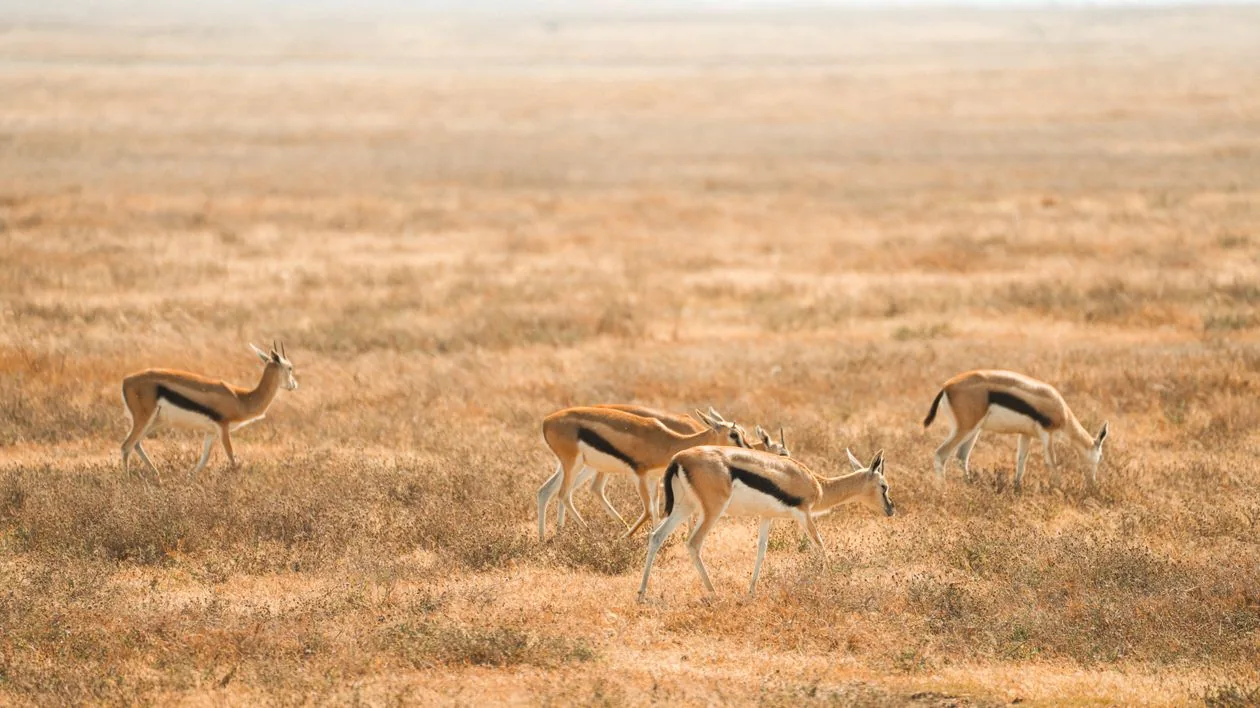
Some places are famous because they’re easy to photograph. The Serengeti is famous because nothing prepares you for the scale of it: grassland running to every edge of the horizon, and on it one of the last great land-animal migrations left on Earth. Lions asleep in the shade of a lone acacia. Giraffes crossing the road as if you weren’t there. A sunrise that turns the whole plain gold before the first vehicle starts its engine.
It belongs on the list because it’s one of the few trips that genuinely can’t be replaced by a documentary. Documentaries show you the chase. What they can’t give you is the silence between sightings, the smell of rain arriving over the plains, or the moment a guide cuts the engine and you realize you’re surrounded.
And then there’s the ending. A short flight from the dust of the safari circuit, Zanzibar answers with warm turquoise water, spice-scented alleys in Stone Town and dhows sailing out at sunset. Together they make a rare kind of trip: intense and gentle, wild and slow — the kind people still talk about decades later.
From someday to a real plan
- Days needed
- 10–13 days
- Best months
- Jun – Oct
- Budget
- US$250–750+ per person per day on safari
- Getting there
- Moderate
- Crowds
- Busy
4–6 safari days on the mainland, then 4–6 on Zanzibar. Fewer than 3 full days inside the Serengeti is mostly driving.
Dry season on the mainland (easier wildlife spotting) lines up with Zanzibar's best beach weather.
Camping safaris sit at the low end, mid-range lodges roughly US$400–700, luxury camps well above US$1,000. Park fees alone are a real share: the Serengeti conservation fee for 2025–26 was US$70 per adult per 24 h in peak season, plus 18% VAT. Zanzibar runs roughly US$100–300 per day. Orientation ranges — verify before booking.
Fly into Kilimanjaro (JRO) for the northern safari circuit, then a short domestic flight to Zanzibar (ZNZ). Long, but no difficult connections.
The central Serengeti and the river crossings in Jul–Sep can draw many vehicles to one sighting. The far north outside August and the south in calving season feel quieter.
The year at a glance
- Jan
- Feb
- Mar
- Apr
- May
- Jun
- Jul
- Aug
- Sep
- Oct
- Nov
- Dec
April–May is the long rainy season: some camps close, roads get muddy and Zanzibar is at its wettest — which is also why prices drop. The herds move in a loop (roughly the south in Jan–Mar, the west in Jun–Jul, the north in Aug–Oct), so the month decides which part of the Serengeti you book, not just whether you go.
What you'll remember
- 01
The Great Migration
Well over a million wildebeest, plus zebra and gazelle, move in a year-round loop between Tanzania and Kenya's Maasai Mara. It isn't an event on a date — it's a location that changes month by month.
- 02
Calving season in the south
Around February, hundreds of thousands of calves are born on the short-grass plains of the southern Serengeti in a few weeks — and the predators follow.
- 03
A Mara River crossing
Roughly July to October in the far north. Herds can wait hours or days before they cross; patience matters more than the exact date you book.
- 04
Ngorongoro Crater
A collapsed volcano nearly 20 km across with a dense, resident population of wildlife — no migration timing needed. Usually one full day.
- 05
Stone Town
Zanzibar's old trading town, a UNESCO World Heritage Site: carved wooden doors, narrow alleys and the Forodhani Gardens food market at dusk.
- 06
A dhow at sunset
The traditional sailboats of the Swahili coast. A sunset sail is one of the simplest and most memorable evenings on the island.
How the trip fits together
- 1 night
Arusha
The safari hub near Kilimanjaro airport. Most operators start and end here.
- 1–2 days
Tarangire
Large elephant herds and baobab trees — at its best in the dry season.
- 1 day
Ngorongoro Crater
Sits on the road to the Serengeti, so it adds almost no extra travel.
- 3–4 days
Serengeti
Choose the area by month, following where the herds are expected to be.
- 4–6 days
Zanzibar
Stone Town first, then the beaches. Book the safari first — the island is the flexible part.
Put it on your list if…
- You want the wildlife trip of a lifetime and can book 6–12 months ahead for peak-season camps.
- You like ending a demanding trip with a slow, easy finish on the beach.
- Long days in a vehicle on unpaved roads sound like part of the adventure.
Maybe skip it if…
- Your budget is well under ~US$200 a day on the mainland — park fees alone take a big share of that.
- You get badly motion-sick or can't sit for 6+ hours on bumpy tracks.
- You want to explore independently: in practice, most Serengeti visits go through a licensed safari operator.
- Zanzibar has required mandatory inbound travel insurance for foreign visitors since October 2024 (US$44 per adult at launch), sold through the official Visit Zanzibar portal or on arrival — check the current rules before you fly.
- Tanzania visa requirements depend on your nationality. Use the official Tanzania Immigration e-visa portal, not a third-party site.
- Ask a travel health clinic about vaccinations and malaria prevention 6–8 weeks before departure, including yellow fever certificate rules if you transit through another country.
- Small planes between safari airstrips often have strict soft-bag luggage limits (commonly around 15 kg). Confirm with the airline.