✦ 06
Faroe Islands
North Atlantic (Denmark) 62.01° N · 6.79° W
Eighteen steep green islands in the North Atlantic, with waterfalls pouring off cliffs into the sea and more sheep than people.
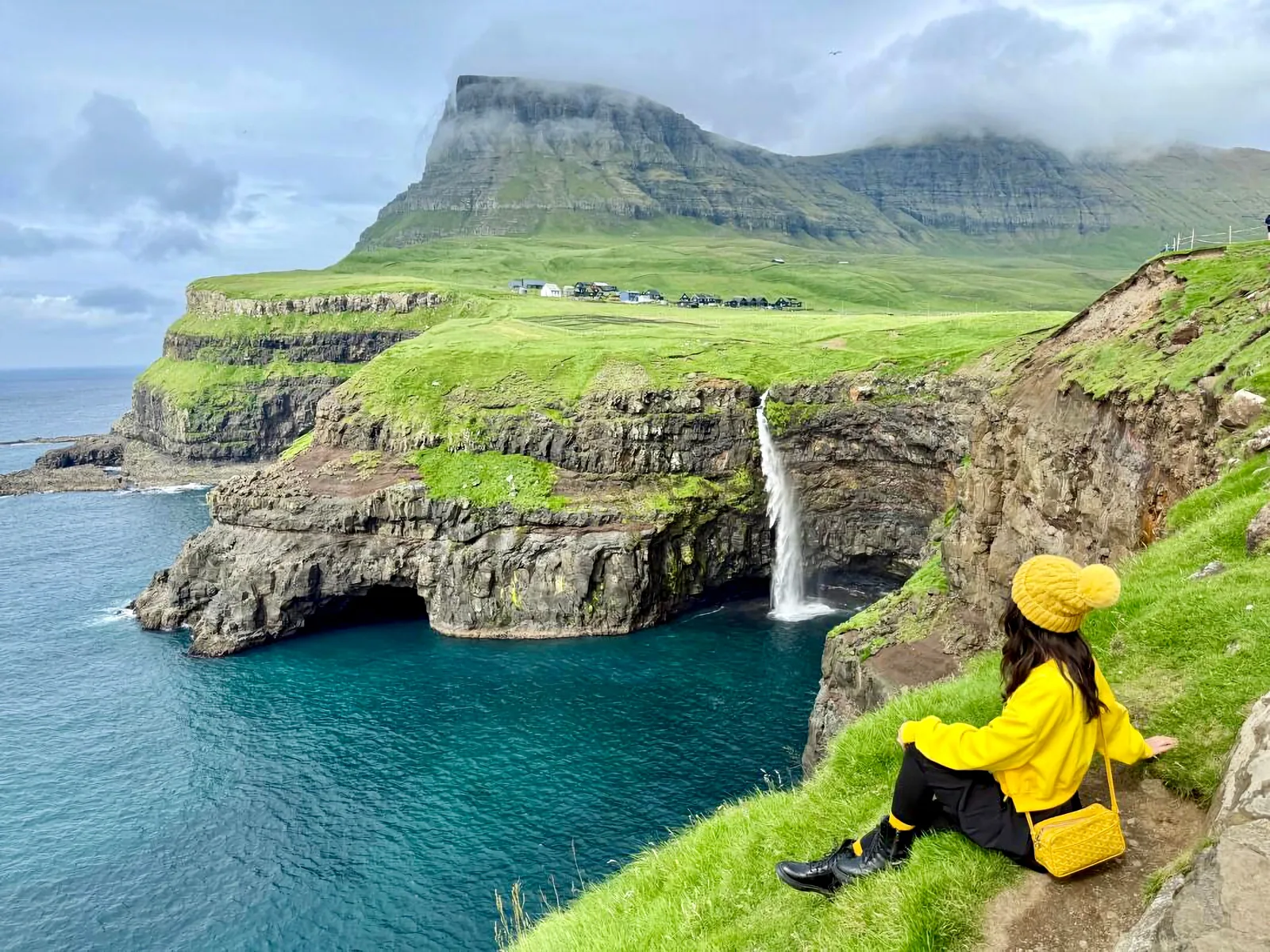
“Rounding a bend on a single-lane road and seeing Múlafossur fall straight off the cliff into the ocean below a tiny grass-roofed village.”
Halfway between Norway and Iceland, the Atlantic has left a scattering of steep, green islands that look like they were designed for a film. Cliffs drop hundreds of metres straight into the sea. Waterfalls spill over the edges. Grass-roofed houses cluster in tiny harbours, and roads cling to the mountainsides before disappearing into tunnels under the ocean.
It belongs on the list because the landscape is outrageously dramatic — and you can have it almost to yourself. Stop the car anywhere and there’s a view: sheep on a ridge, a fjord below, clouds pouring over a mountain like a slow waterfall. The weather changes every hour, so the same place never looks the same twice.
And then there are the moments that feel unreal: a waterfall falling off the edge of the world at Gásadalur, a lake that seems to hang above the ocean, a tiny red lighthouse at the tip of a grassy ridge. Bring a raincoat, keep your plans flexible, and let the islands decide the day.
From someday to a real plan
- Days needed
- 4–6 days
- Best months
- Jun – Aug
- Budget
- US$180–350 per person per day
- Getting there
- Straightforward
- Crowds
- Light
4 days cover Vágar, Tórshavn and one northern island. Add 1–2 days as a weather buffer — some of the best hikes and ferries depend on it.
Long daylight, the mildest weather and puffins on Mykines. It's still cool and changeable — pack for rain in any month.
Accommodation, car rental and eating out are expensive. Several popular hikes charge landowner fees (around 200 DKK per person on some trails), and subsea tunnels have tolls. Orientation ranges — verify before booking.
Direct flights to Vágar (FAE) from Copenhagen year-round, plus seasonal routes from other European cities. A rental car is the practical way to get around.
Famous viewpoints get busy in July, but even then it rarely feels crowded — and lesser-known valleys are empty.
The year at a glance
- Jan
- Feb
- Mar
- Apr
- May
- Jun
- Jul
- Aug
- Sep
- Oct
- Nov
- Dec
Winter is dark, stormy and wet, with limited ferries and some hikes closed. May and September are good compromises: fewer visitors, still reasonable daylight. Fog can roll in within minutes in any season.
What you'll remember
- 01
Múlafossur waterfall
The waterfall below the village of Gásadalur on Vágar, dropping from the cliff straight into the Atlantic.
- 02
Trælanípan: the lake above the ocean
A hike beside Lake Sørvágsvatn to cliffs where, from the right angle, the lake seems to float high above the sea.
- 03
Kallur Lighthouse on Kalsoy
A small red lighthouse on a knife-edge grass ridge — a car ferry from Klaksvík, a short hike and a paid trail.
- 04
Puffins on Mykines
In summer, puffins nest on the cliffs of the westernmost island, reached by ferry or helicopter when weather allows.
- 05
Gjógv and Saksun
Tiny villages with turf-roofed houses: Gjógv beside a sea gorge used as a harbour, Saksun above a tidal lagoon.
The honest catch
Iceland next door gets the attention, flights are limited, and the islands are expensive. Accommodation is small-scale and books out in summer. The weather decides what you can do each day, many trails cross private land with fees or rules, and the whole country has only around 55,000 residents. For people who want drama without crowds, that's the attraction.
How the trip fits together
- 1–2 days
Vágar
The airport island: Múlafossur, Trælanípan and the ferry to Mykines.
- 1 day
Tórshavn
One of the world's smallest capitals, with the old Tinganes quarter of red wooden buildings.
- 1 day
Eysturoy
Gjógv, the highest peak Slættaratindur, and a subsea tunnel with a roundabout in it.
- 1 day
Kalsoy & Klaksvík
Car ferry to Kalsoy for the Kallur Lighthouse hike.
Put it on your list if…
- Wild coastal scenery matters more to you than sunshine.
- You like hiking and driving empty roads with a view around every corner.
- You'd rather have Iceland-style landscapes without Iceland-size crowds.
Maybe skip it if…
- Rain, wind and changing plans would ruin your trip.
- You're on a tight budget.
- You're uncomfortable near exposed cliff edges in wind.
- Check hiking fees, opening hours and guide requirements on the official Visit Faroe Islands website — they change and are enforced.
- Never go near cliff edges in fog or strong wind. Check local weather forecasts every morning.
- Book car rental and accommodation early for June–August.
- Ferries to Mykines and Kalsoy are weather-dependent and limited — build in a spare day.