Nº 20
Easter Island
Rapa Nui, Chile 27.12° S · 109.35° W
A small volcanic island in the middle of the Pacific, thousands of kilometres from any continent, watched over by nearly a thousand giant stone moai.
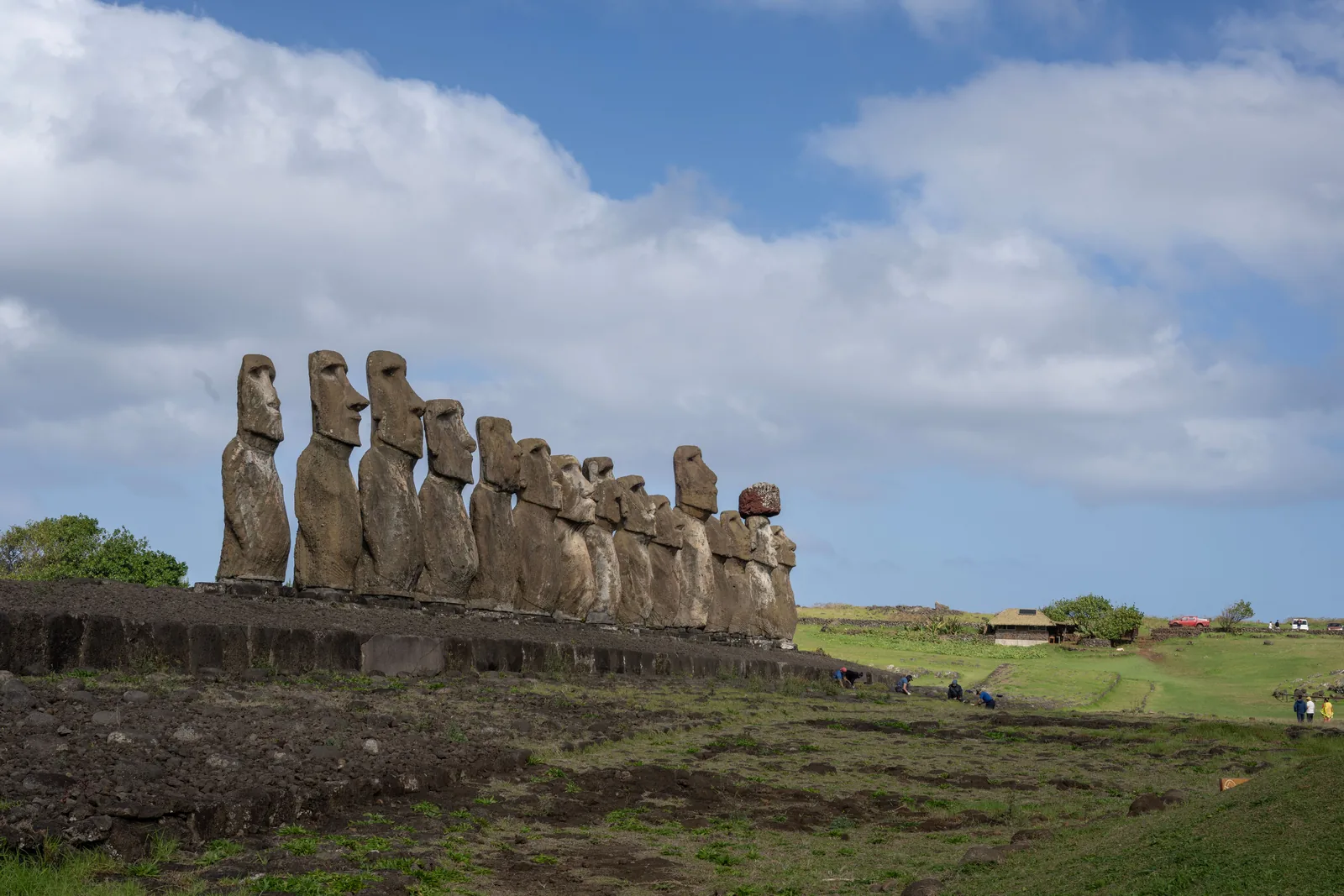
“Waiting in the cold darkness at Ahu Tongariki as the sun rises behind fifteen moai standing in a row, their silhouettes slowly turning gold.”
Somewhere in the middle of the Pacific Ocean, more than 3,500 kilometres from the coast of Chile, lies one of the most isolated inhabited islands on Earth. It’s small enough to drive around in an afternoon. And across its green volcanic hills stand nearly a thousand giant stone figures, the moai, carved centuries ago by the Rapa Nui people.
It belongs on the list because nothing else in the world looks like it. The moai stand with their backs to the sea, watching over the land, some in lines on stone platforms, others still lying unfinished in the quarry where they were carved. Standing among them, you feel both the scale of the achievement and the mystery that still surrounds how they were moved.
And the island itself is part of the wonder: wild horses grazing on the slopes, waves breaking against black lava cliffs, a crater lake inside a volcano, and a living Polynesian culture that still dances, sings and competes at its annual festival. Getting here is a journey. Being here feels like standing at the edge of the world.
From someday to a real plan
- Days needed
- 4–5 days
- Best months
- Dec – Mar
- Budget
- US$150–350 per person per day
- Getting there
- Remote
- Crowds
- Light
Three full days cover the main archaeological sites with a guide; a fourth or fifth day adds a sunrise at Tongariki, Anakena beach and time for flight delays.
Southern summer: warm weather and calm seas. Early February is the Tapati Rapa Nui festival — spectacular, but flights and lodging book out early.
Everything is shipped or flown in, so food and lodging cost more than on mainland Chile. The Rapa Nui National Park ticket for foreign visitors is around US$80, valid for 10 days, and the round-trip flight from Santiago is a large part of the total. Orientation ranges — verify before booking.
Flights from Santiago take around 5–6 hours, with a limited number of weekly departures. Some routes also connect with Tahiti — check current schedules.
Visitor numbers are capped by flights and lodging. Tour groups converge on Tongariki and Rano Raraku mid-morning; sunrise and late afternoon are calmer.
The year at a glance
- Jan
- Feb
- Mar
- Apr
- May
- Jun
- Jul
- Aug
- Sep
- Oct
- Nov
- Dec
The island has a mild subtropical climate year-round. Winter (June–August) is cooler, windier and wetter, with fewer visitors. The Tapati festival in early February is the busiest and most expensive time.
What you'll remember
- 01
Sunrise at Ahu Tongariki
Fifteen restored moai on the island's largest ceremonial platform, with the sun rising behind them.
- 02
Rano Raraku
The volcanic quarry where most moai were carved, with dozens still half-buried on its slopes. Single entry per park ticket.
- 03
Orongo and the Birdman cult
A ceremonial stone village on the rim of the Rano Kau crater, linked to the island's Birdman competition.
- 04
Anakena beach
White coral sand, palm trees and a row of moai with carved topknots right behind the beach.
- 05
Sunset at Tahai
Moai silhouetted against the Pacific on the edge of Hanga Roa, the island's only town.
- 06
The Tapati festival
Two weeks of traditional competitions, dance and music, usually in early February.
How the trip fits together
- 1 night
Santiago
A buffer night on the mainland before the long flight.
- Base, 4–5 nights
Hanga Roa
The only town: guesthouses, restaurants and the sunset moai at Tahai.
- 1–2 days
South and east coast
Rano Raraku, Ahu Tongariki and the coastal platforms, with a licensed guide.
- 1–2 days
Rano Kau & Anakena
Orongo on the crater rim, then the island's main beach.
Put it on your list if…
- Archaeology and remote islands are your idea of a dream.
- You're happy to spend a lot of time and money getting somewhere truly isolated.
- Guided visits and respecting local rules feel like part of the experience.
Maybe skip it if…
- You only have a weekend — the flights alone take most of it.
- You want a classic beach holiday; there are only a couple of sandy beaches.
- You'd prefer to explore sites on your own without a guide.
- Visitors need to complete the official entry form, show a return ticket and registered accommodation, and can stay a maximum of 30 days. Check current rules with official Chilean sources.
- Most archaeological sites must be visited with a guide accredited by the Ma'u Henua indigenous community that manages the park.
- Never touch or climb on moai or ceremonial platforms — they are sacred and fines apply.
- Book flights and lodging early for December–March, especially around the Tapati festival.