Nº 16
Mount Fuji
Japan 35.36° N · 138.73° E
Japan's highest mountain — an almost perfectly symmetrical volcano, sacred for centuries, that appears above lakes, pagodas and cherry trees.
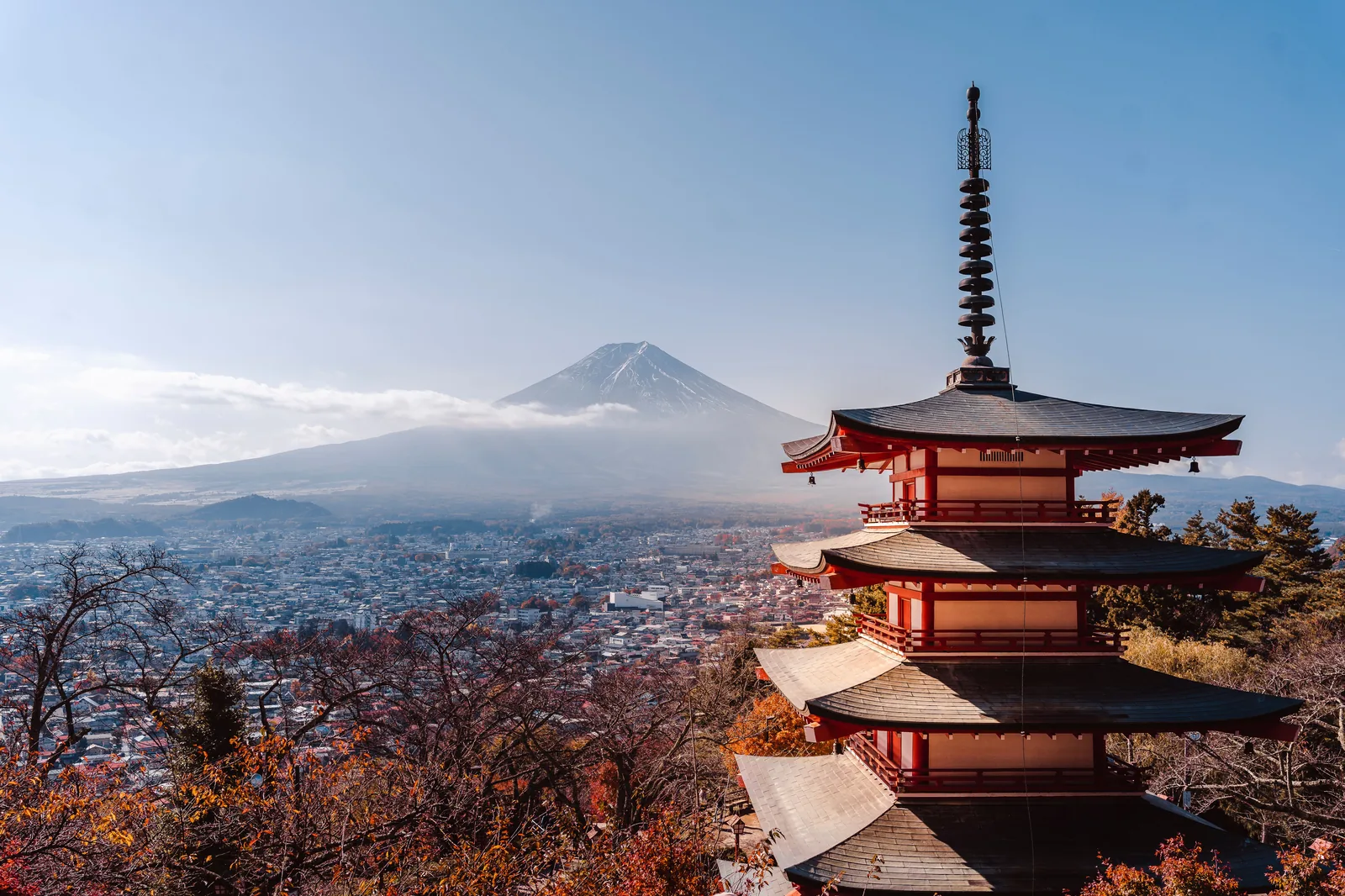
“Climbing the steps to the Chureito Pagoda on a cold, clear morning and seeing the snow-capped cone of Fuji rise behind its red roofs.”
Few mountains are as instantly recognizable. Mount Fuji rises alone above the plains west of Tokyo, a nearly perfect snow-capped cone reaching 3,776 metres — the highest point in Japan. For centuries it has been sacred, painted, climbed by pilgrims and gazed at from temples, and it still stops people in their tracks.
It belongs on the list because it’s more than a mountain: it’s the heart of an entire aesthetic. See it framed by a red pagoda and autumn maples, reflected in a still lake at dawn, or glimpsed between cherry blossoms in spring, and you understand why it appears in so much Japanese art. On clear winter mornings, it looks almost unreal against the blue sky.
And it offers two very different experiences. In the cold months, you come to look — from lakes, trains and hot-spring baths. In summer, you can join thousands of climbers on a night ascent and watch the sun rise from the summit above a sea of clouds. Either way, it’s Japan at its most iconic.
From someday to a real plan
- Days needed
- 2–3 days
- Best months
- Oct – Feb (views) · Jul – Sep (climbing)
- Budget
- US$120–300 per person per day
- Getting there
- Straightforward
- Crowds
- Busy
Two nights around the Fuji Five Lakes (or Hakone) give you two chances at a clear morning. Climbing to the summit takes 1–2 days in season.
Cold, dry months give the clearest views of the mountain. The official climbing season is summer, when Fuji is often hidden by cloud from below.
Ryokan stays with hot springs and dinner cost more than business hotels. Climbers paid a ¥4,000 fee on all four main trails in 2026, plus mountain huts if staying overnight. Orientation ranges — verify before booking.
About 2 hours from Tokyo to Kawaguchiko by express bus or train. Hakone is around 1.5 hours from Tokyo.
Popular viewpoints and towns get very busy, especially in cherry blossom and autumn leaf season. Weekday sunrises are far calmer.
The year at a glance
- Jan
- Feb
- Mar
- Apr
- May
- Jun
- Jul
- Aug
- Sep
- Oct
- Nov
- Dec
June is the rainy season, and summer haze often hides the mountain. Cherry blossoms around the lakes usually peak in early to mid-April; autumn leaves in November. Climbing outside the official season is dangerous and strongly discouraged.
What you'll remember
- 01
Chureito Pagoda
A five-storey pagoda above Fujiyoshida, reached by around 400 steps, with the classic view of Fuji behind it.
- 02
Lake Kawaguchi at dawn
On still mornings, the mountain reflects in the lake — best in the cold months.
- 03
Sunrise from the summit
Climbers start in the night or sleep in a mountain hut to reach the 3,776 m summit for the sunrise.
- 04
Hakone
Hot-spring town with a ropeway over volcanic valleys, a cruise on Lake Ashi and Fuji views on clear days.
- 05
A room with a view
Some ryokan and onsen baths look directly at the mountain — a very Japanese way to enjoy it.
- 06
Fuji from the bullet train
On the Tokyo–Osaka Shinkansen, the mountain can appear on the right-hand side heading west on clear days.
How the trip fits together
- Start
Tokyo
Easy departure by bus or train.
- 2 nights
Kawaguchiko & Fuji Five Lakes
Chureito Pagoda, lakeside walks and sunrise views.
- 1 night
Hakone
Hot springs, the ropeway and Lake Ashi.
- Onward
Kyoto (onward)
Continue west by Shinkansen — see the Japan country guide.
Put it on your list if…
- You want the most iconic view in Japan and can be flexible with the weather.
- Early starts for the clearest skies don't bother you.
- You're fit and want to climb a famous mountain in summer.
Maybe skip it if…
- You only have one day and can't move it if it's cloudy.
- You'd only visit in June and want guaranteed views.
- Crowded viewpoints would spoil it — choose quieter lakes like Motosu or Shoji instead.
- Climbers must register, pay the fee and follow new rules on trail gate times. Check the official Yamanashi and Shizuoka prefecture Fuji climbing information.
- Weather on the summit can be freezing even in August — bring proper layers, rain gear and a headlamp.
- Be respectful at local viewpoints: some towns have introduced barriers and rules after overcrowding.
- Check Japan's entry requirements for your passport on official government sources.