✦ 12
Lofoten Islands
Arctic Norway 67.93° N · 13.09° E
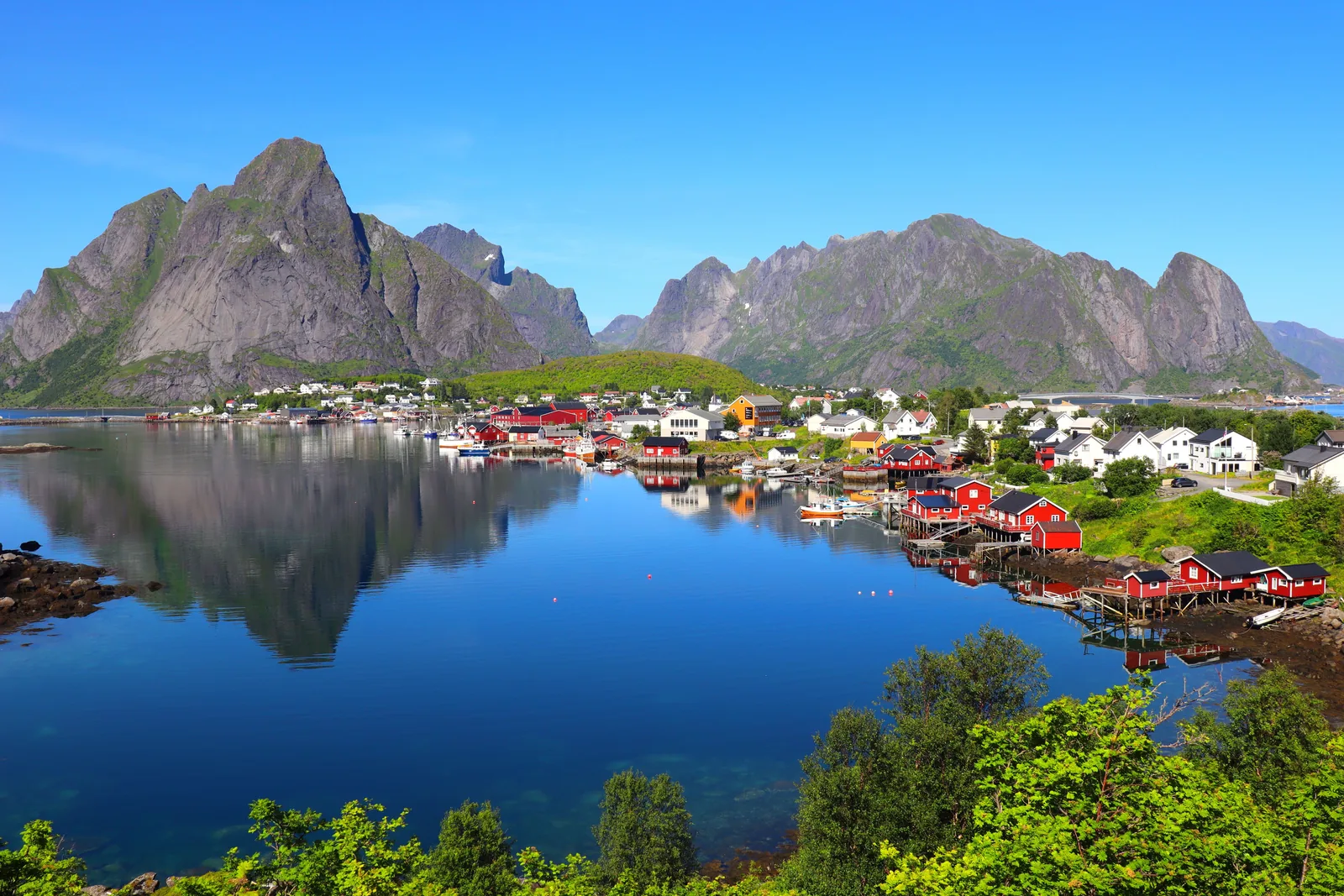
Jagged granite peaks rising straight from the Arctic sea, with red fishing cabins, white-sand beaches and fish drying on wooden racks.
“Reaching the top of the stone staircase above Reine and seeing the whole village, the fjords and the peaks laid out beneath you in the midnight light.”
High above the Arctic Circle, off the coast of northern Norway, a chain of islands rises straight out of the sea like a wall of dark, jagged teeth. The Lofoten Islands are a place where mountains plunge directly into turquoise water, where tiny red cabins sit on stilts in quiet harbours, and where cod has been hung to dry on wooden racks for a thousand years.
It belongs on the list because it seems to combine every kind of beauty at once. There are beaches of white sand that look tropical until you touch the water. There are peaks you can climb for views that stop your breath. And there’s the light: in summer, the sun circles the sky and never sets; in winter, the northern lights ripple over snow-covered mountains.
And it still feels like a working Arctic world, not a theme park. Fishing boats come and go, villages are small and weather decides the day. Drive the single road from island to island and every bend reveals a view that seems too perfect to be real.
From someday to a real plan
- Days needed
- 4–7 days
- Best months
- Jun – Aug · Feb – Mar
- Budget
- US$200–400 per person per day
- Getting there
- Moderate
- Crowds
- Moderate
Four days cover the drive along the islands with a hike or two. A week allows for weather days, beaches and a slower pace between villages.
Summer brings the midnight sun and hiking; late winter brings snowy peaks, northern lights and returning daylight.
Norway is expensive, and Lofoten's small supply of rorbuer (fishermen's cabins) fills up early in peak seasons. A rental car is almost essential. Orientation ranges — verify before booking.
Fly via Bodø to Leknes or Svolvær, take the car ferry from Bodø to Moskenes (a few hours), or fly into Harstad/Narvik (Evenes) and drive the E10.
Summer brings campervans and busy car parks at famous spots like Reine and Hamnøy. Outside July and in winter, the islands feel far emptier.
The year at a glance
- Jan
- Feb
- Mar
- Apr
- May
- Jun
- Jul
- Aug
- Sep
- Oct
- Nov
- Dec
Lofoten is milder than its latitude suggests thanks to the Gulf Stream, but storms can hit in any season. In December and early January there's very little daylight, and many hikes are unsafe in snow and ice without experience.
What you'll remember
- 01
Reinebringen
A steep, Sherpa-built stone staircase up the mountain above Reine, with one of the most famous views in Norway.
- 02
Hamnøy and Reine
Red and yellow cabins on the water beneath sheer granite walls — the postcard of Lofoten.
- 03
Kvalvika Beach
A wild beach between mountains, reached on foot, where some people camp under the midnight sun.
- 04
The midnight sun
From roughly late May to mid-July the sun doesn't set — hikes and beach walks at midnight become normal.
- 05
Northern lights over the peaks
From around September to March, auroras can dance over fjords and snowy mountains. The Northern Lights are one of the Icons on this list.
- 06
Stockfish and fishing villages
Cod dry on wooden racks in late winter and spring, as they have for centuries; Nusfjord and Henningsvær show the islands' fishing heritage.
The honest catch
Lofoten sits above the Arctic Circle, a long way from Norway's main travel routes, and getting there means small planes, long ferries or a big drive. It's expensive, weather is unpredictable, and accommodation is limited. Many travellers to Norway stop at the fjords further south — and never see the Arctic peaks rising straight from the sea.
How the trip fits together
- 1–2 days
Svolvær & Henningsvær
The main town, and a fishing village with a famous rock-island football pitch.
- 1–2 days
Vestvågøy
White-sand Haukland and Uttakleiv beaches, and Unstad's Arctic surf.
- 1 day
Flakstad
Nusfjord's historic fishing village and the Kvalvika Beach hike.
- 2 days
Moskenesøy: Reine & Å
Reinebringen, Hamnøy and the end of the road at Å.
Put it on your list if…
- Mountains, sea and beaches in one place sound irresistible.
- You want to experience the midnight sun or winter auroras somewhere spectacular.
- You're happy to plan around weather rather than a fixed schedule.
Maybe skip it if…
- Your budget is very tight.
- Steep, exposed hikes and changeable weather worry you.
- You want city life, restaurants and nightlife every evening.
- Book accommodation and car rental early for summer and late winter.
- Check trail conditions and weather before hiking; many routes are steep and slippery, and rescues are common.
- Follow local rules on camping, parking and toilets — some villages are under pressure from summer visitors.
- Check ferry timetables and reservations for the Bodø–Moskenes route in advance.