✦ 20
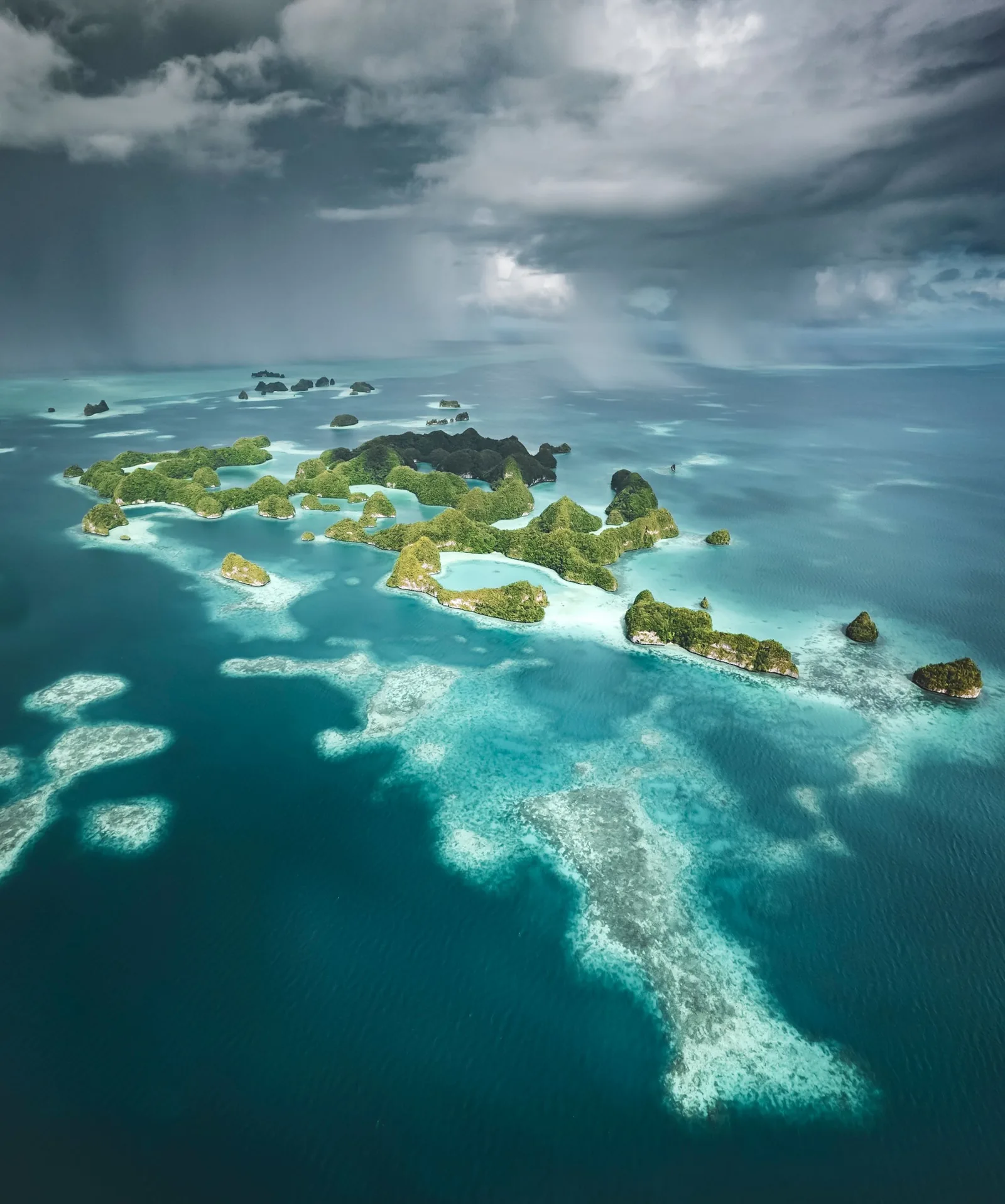
The Rock Islands of Palau
Palau (Micronesia) 7.22° N · 134.37° E
Hundreds of mushroom-shaped limestone islands covered in jungle, scattered across a turquoise lagoon in the western Pacific — and a world-class reef around them.
“Floating in a hidden marine lake surrounded by jungle, with harmless golden jellyfish drifting past your mask in the green water.”
In the far western Pacific, east of the Philippines, a turquoise lagoon is scattered with hundreds of small islands shaped like giant green mushrooms. Their bases have been eaten away by the sea, their tops covered in dense jungle. Between them lie coral reefs, sandy coves and hidden marine lakes. These are the Rock Islands of Palau, a UNESCO World Heritage Site and one of the most spectacular seascapes on Earth.
It belongs on the list because it’s what paradise looks like when it’s been protected. Glide by boat between the islands and every turn reveals another impossible colour of water. Slip into the sea and you’re surrounded by coral gardens, turtles and reef sharks. In one hidden lake, golden jellyfish drift in the sunlight, having evolved almost without stings.
And Palau takes its role seriously. Every visitor signs a pledge to protect the islands, stamped right into their passport. It’s far away, expensive and small. That’s exactly why it still feels like one of the last untouched wonders of the ocean.
From someday to a real plan
- Days needed
- 5–8 days
- Best months
- Dec – Apr
- Budget
- US$200–450 per person per day
- Getting there
- Expedition
- Crowds
- Near-empty
Five days allow three or four boat days among the Rock Islands. Divers usually stay a week or more to reach the famous outer reef sites.
The drier season, with calmer seas and good visibility. Palau lies south of the main typhoon belt, but the wetter months bring more rain and wind.
Hotels in Koror and boat or dive trips are the main costs. Rock Islands permits were US$50 (10 days) or US$100 including Jellyfish Lake at last check, and a US$100 environmental fee is usually included in international airfare. Orientation ranges — verify before booking.
Fly to Koror (ROR) via hubs such as Guam, Manila or Taipei; routes and frequencies change, so check current schedules. Everything in the Rock Islands is reached by boat.
Visitor numbers are small, and boat trips spread across a huge lagoon. Popular stops like the Milky Way can see several boats at once.
The year at a glance
- Jan
- Feb
- Mar
- Apr
- May
- Jun
- Jul
- Aug
- Sep
- Oct
- Nov
- Dec
Diving is possible year-round. From roughly July to October, rain and wind are more frequent and some trips may change with sea conditions.
What you'll remember
- 01
Jellyfish Lake
A marine lake on Eil Malk island where golden jellyfish live without dangerous stings. Their numbers rise and fall with climate conditions — check current status before you go.
- 02
The Milky Way
A hidden lagoon with pale limestone mud on the bottom and water of an unreal milky turquoise.
- 03
Blue Corner and German Channel
World-famous dive sites with reef sharks, turtles and — in German Channel — manta rays.
- 04
Kayaking between islands
Paddling through narrow channels under overhanging limestone and into hidden beaches.
- 05
WWII history
Shipwrecks, planes and relics from World War II lie in the lagoon and on the islands.
The honest catch
Palau is a tiny island nation far out in the western Pacific, with flights only through a few regional hubs, high prices and limited hotels. It has made a point of protecting itself rather than growing mass tourism: visitors sign an environmental pledge stamped into their passports, and harmful sunscreens are banned. Those who make the journey find reefs and lagoons that still feel wild.
How the trip fits together
- Base, 5–8 nights
Koror
Palau's main town, with hotels, restaurants and dive shops.
- 2–3 days
Rock Islands boat day
Jellyfish Lake, the Milky Way, beaches and snorkelling spots.
- 2–4 days
Outer reef diving
Blue Corner, German Channel and other walls for certified divers.
- 1 day
Babeldaob
Palau's largest island: waterfalls, stone monoliths and villages.
Put it on your list if…
- Snorkelling, diving and wild tropical islands are your passion.
- You value places that put conservation ahead of mass tourism.
- You're willing to pay more for a remote destination.
Maybe skip it if…
- Your budget is tight — flights, boats and dives add up fast.
- You don't enjoy being on boats or in the water.
- You want lots of nightlife, shopping or big resorts.
- Visitors sign the Palau Pledge on arrival and must follow environmental rules; sunscreens containing certain reef-harming chemicals are banned.
- Buy Rock Islands and Jellyfish Lake permits through licensed tour operators, and check whether Jellyfish Lake is open and how the jellyfish population is doing.
- Check Palau's entry requirements for your passport on official government sources.
- Divers should carry dive insurance and check for decompression chamber access before travel.